In this article
You walk into the garage or utility closet and see it: a puddle at the base of the water heater, or dampness creeping across the floor around the tank. Your stomach drops, because a water heater leaking can mean anything from a five-minute fix to a full replacement, and meanwhile 40 to 50 gallons of hot water are sitting in a metal tank that might be failing.
Before you panic, take a breath. Not every puddle near a water heater is a tank failure, and even real leaks give you warning signs long before they become emergencies. This guide walks you through how to tell what is actually happening, the steps to take immediately, and how to decide between repair and replacement.
First: Is It Really the Water Heater?
A surprising number of "water heater leaks" turn out to be something else entirely. Before assuming the tank is failing, rule out these common impostors:
- Condensation. In humid weather or in damp garages and crawl spaces, cold water entering a hot tank causes condensation that drips down the outside. If the "leak" appears on humid days and the tank itself is dry to the touch, it may just be sweat.
- A nearby plumbing leak. Water travels. A dripping supply line, a sweating cold-water pipe, or a leak from an adjacent washing machine can pool at the water heater's base simply because it is the lowest nearby point.
- TPR valve discharge. The temperature and pressure relief valve has a discharge pipe running down the side of the tank. If it is dripping, that is a pressure or temperature issue, not a tank leak, but it still needs attention.
- Loose fittings. Water at the top of the tank often comes from inlet/outlet connections or the cold water supply valve, which can sometimes be tightened or resealed.
Dry the area thoroughly with towels, then lay dry newspaper or paper towels around the base. Check back in an hour. The wet spot's location tells you where to look: top means fittings or connections, side means the TPR valve or a seam, bottom means the tank itself or the drain valve.
7 Signs Your Water Heater Is Leaking
Water heaters rarely fail without warning. These are the signs homeowners notice in the weeks or months before a real failure:
- Pooling water at the base that returns after you dry it up. The classic sign of a tank leak.
- Rusty or discolored hot water from taps. Internal tank corrosion is flaking into your water supply.
- Rust streaks or corrosion on the outside of the tank, especially around seams, the base, or pipe connections.
- A rotten-egg smell in hot water, caused by bacteria reacting with the anode rod. Not a leak sign itself, but a sign the tank's internals are aging.
- Rumbling, popping, or banging noises from sediment buildup hardening at the tank bottom, which overheats the metal and accelerates failure.
- Water that never gets quite hot enough, suggesting sediment is insulating the burner or elements from the water.
- Age. Conventional tank heaters last 8 to 12 years. If yours is over a decade old and showing any of the above, treat every symptom seriously.
Common Causes of Water Heater Leaks
| Source of leak | Typical signs | How urgent |
|---|---|---|
| Corroded tank interior | Water seeping from the base or seams, rusty water | High: tank is failing, plan replacement |
| Loose inlet/outlet connections | Drips from the top of the tank | Moderate: often repairable |
| Faulty TPR valve | Water from the discharge pipe on the tank's side | High: safety device, do not ignore |
| Leaking drain valve | Slow drip from the spigot near the tank bottom | Low to moderate: valve can be replaced |
| Excessive pressure | TPR valve discharging, banging pipes | High: can damage the whole plumbing system |
| Sediment damage | Rumbling noises, reduced hot water, eventual tank breach | Moderate: flush the tank, monitor closely |
The pattern is clear: leaks from connections and valves are usually repairable, while leaks from the tank body itself almost always mean replacement. No sealant or patch reliably fixes a corroded tank, because the corrosion is happening across the entire interior surface, not just at the visible drip.
A water heater does not heal. A tank that is seeping today is a tank that will fail completely, and the only question is whether it happens while you are watching or while you are away for the weekend.
What to Do Right Now: 6 Steps
- Turn off the water supply to the heater using the cold-water shutoff valve above the tank. Turn it clockwise until it stops.
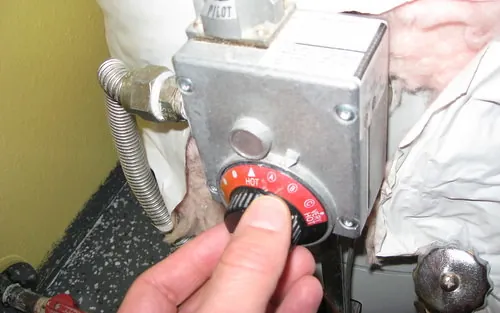
- Turn off the heat source. For gas, set the control to pilot or off. For electric, switch off the dedicated breaker. Never let a drained or draining tank keep heating.
- Relieve pressure by opening a hot water faucet somewhere in the house and carefully lifting the TPR valve lever briefly.
- Contain the water. Towels, mops, and a wet vacuum around the base. If the leak is active, place a bucket under the drip and run a hose from the drain valve to a floor drain if possible.
- Document the leak. Take photos of where the water is coming from. This helps any technician diagnose faster and supports insurance documentation if there is damage.
- Call for professional help. A technician can determine in minutes whether you are looking at a fitting, a valve, or a dying tank, and can check for hidden moisture damage in surrounding walls and floors.
Repair or Replace? How to Decide
Use these guidelines to make the call:
- Repair when the tank is under 8 years old, the leak comes from a valve or connection, the tank body is dry and rust-free, and hot water performance is otherwise normal.
- Replace when the tank itself is leaking, the unit is 10-plus years old, rusty water comes from hot taps, or you have already repaired it once and problems are returning.
- Consider upgrading to a high-efficiency or tankless unit when replacing, especially if your household's hot water needs have changed. The energy savings over a new tank's lifespan are substantial.
One more consideration: a leaking water heater often damages more than itself. Water wicks into drywall, subflooring, and framing, where it feeds mold for months unnoticed. Replacing the heater without checking the surrounding area for hidden moisture is a common and costly oversight.
How Leak Detection Pinpoints the Source
When the source of water near a heater is unclear, guessing is expensive. Professional water heater leak detection uses thermal imaging to see the exact path of hot water escaping the system and moisture meters to map how far dampness has spread into surrounding materials. Acoustic sensors can hear pressurized leaks in supply lines that the eye cannot find. The result is a precise diagnosis: fitting, valve, supply line, or tank, plus a map of any secondary damage.
If your water heater is leaking, or you are not sure whether that dampness is really coming from the tank, call ProLine Leak Fix Pros at (425) 380-0028. We will find the true source, show you the extent of any hidden moisture, and give you straight answers about your options. Serving Lynnwood, Alderwood, Lake Serene, and surrounding Snohomish County neighborhoods.