In This Article
You open the garage on a dry morning and the concrete is dark with moisture. It has not rained in a week, the car is dry, and nothing stored out there has spilled. Yet one patch of floor, or sometimes the whole slab, looks damp and feels cool and slick. A wet garage floor with no rain is puzzling, but it follows a short list of causes.
Three explanations cover nearly every case: condensation on a cold slab, groundwater pressing up from below, and a water line leaking under the concrete. Each one needs a different response, so guessing wrong wastes time. This guide gives you two simple tests that separate the causes, the signs that point to a real pipe leak, and the point where professional detection takes over.
The Three Usual Causes of a Wet Garage Slab
Condensation is the most innocent cause. A garage slab sits on cool ground, and on a humid day the concrete surface can drop below the dew point of the air. Moisture from the air then collects on the floor, much like water on a cold mirror. Condensation tends to cover a wide area fairly evenly, appears on muggy days, and also shows on other cool surfaces like metal tools or a water heater tank.
Groundwater is the second cause. After long wet periods in Lynnwood, the soil under the slab saturates and moisture wicks up through the concrete, often along joints and cracks first. It lags behind the rain by days, which is why it can appear after the sky clears. The third cause is a leaking pressurized line under the slab, either the service line or a branch feeding the house. That wetness is steady, local, and indifferent to weather, and it is the one that needs prompt attention.
The Tape Test and the Meter Test
Two simple checks do most of the sorting:
- Tape a square of clear plastic flat to the driest looking part of the wet area and seal all four edges.
- Wait 24 to 48 hours, then look. Moisture on top of the plastic means condensation from the air.
- Moisture trapped under the plastic means water is rising through the slab from below.
- Run the water meter test with all fixtures off. Movement points to a pressurized pipe leak.
- Mark the edges of the wet patch with chalk and date it, so you can see whether it grows.
- Feel for warmth. A warm patch over a cold slab can mark a hot water line leaking below.
Together these tests divide the problem cleanly. Condensation is a ventilation and humidity matter. Moisture from below with a still meter leans toward groundwater. Moisture from below with a moving meter is a pipe leak until proven otherwise.
Temperature adds one more sorting clue. Condensation forms most readily when warm, humid air meets a slab cooled by the ground, a pattern common in spring and early summer in the Puget Sound area. Groundwater moisture, by contrast, tracks the wet season and the height of the water table after weeks of rain. A slab leak ignores both calendars. If your wet patch keeps its own schedule through every season and weather pattern, that independence is itself evidence, and it belongs in the notes you hand to a technician.
Signs the Wet Floor Is a Slab Leak
Certain details push the diagnosis toward a leaking line. The wet area stays in one place and slowly expands, instead of appearing evenly across the whole garage. Cracks or joints inside the patch weep steadily, and the patch is already damp early in the morning after a dry night. White mineral crust at the edges, called efflorescence, shows water has been traveling through the concrete for a while, carrying salts with it.
Other clues live outside the garage. The water meter creeps with everything off. A section of yard along the service line stays soft. The water bill climbs without a change in use, or you hear faint running water in a quiet house. One clue alone can mislead, but two or three together make a strong case, and they give a detection technician a clear starting point.
Check the perimeter before blaming the middle of the slab. Water can enter at the joint where the garage floor meets the foundation wall, then spread inward and look like it rose through the center. Look for a damp line along the base of the walls, staining at the bottom of door frames, and moisture under items stored against the wall. A patch fed from the edge behaves differently under the tape test as well, because it keeps arriving from one direction. Finding the entry edge can redirect the whole fix toward drainage outside that wall.
How Professionals Confirm a Leak Under the Slab
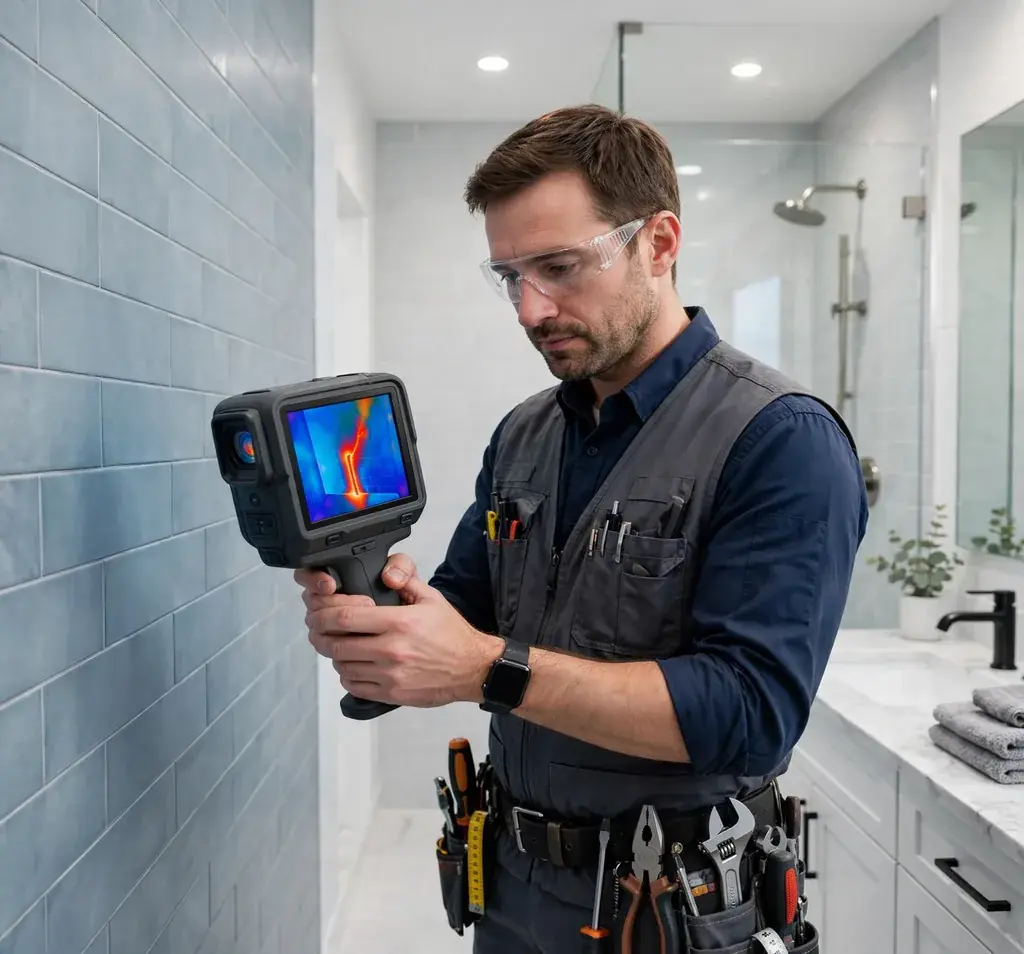
A detection visit begins by proving whether the plumbing is losing water at all. The technician checks the meter, then isolates the house lines from the service line with the shutoff valves, so the loss is assigned to the right section. Moisture meters and a thermal imaging scan map the wet pattern in the slab and can reveal the warm trail of a hot line leak hiding below the surface.
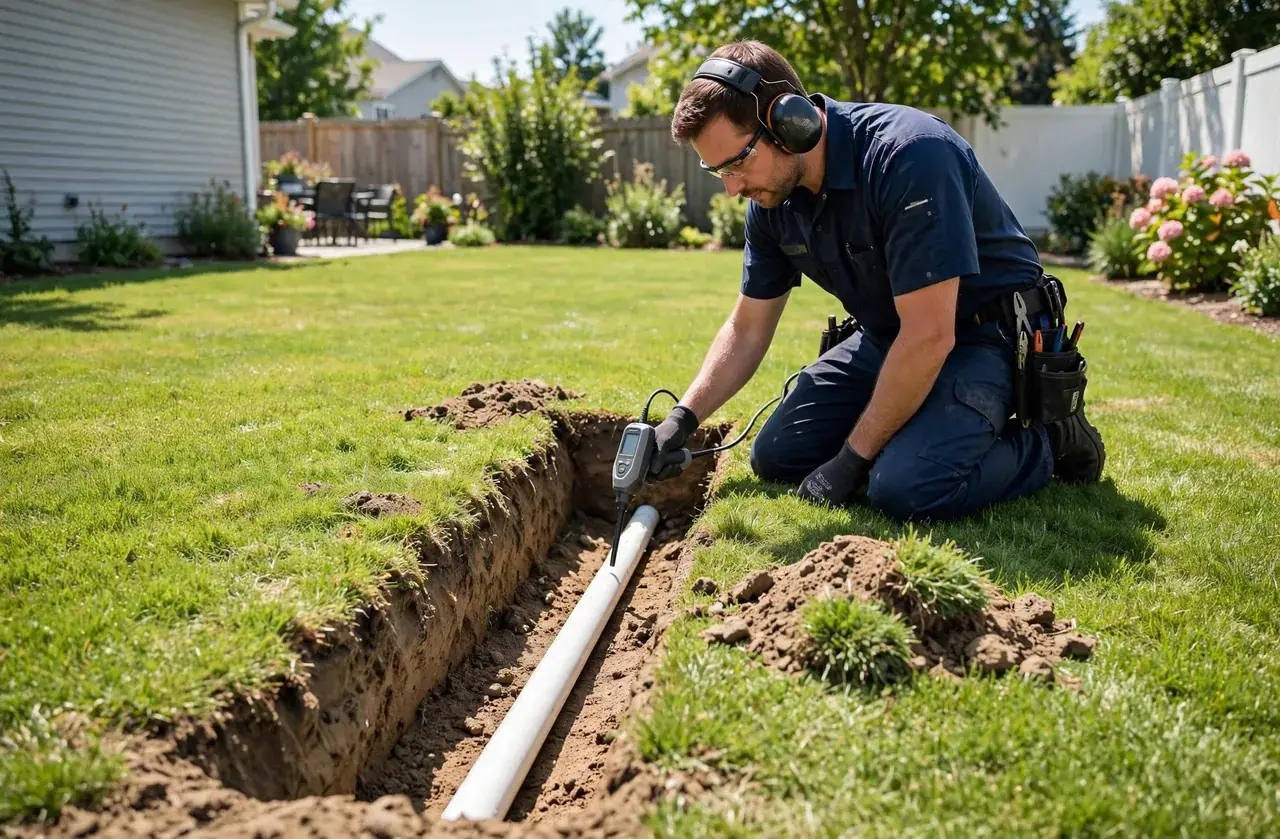
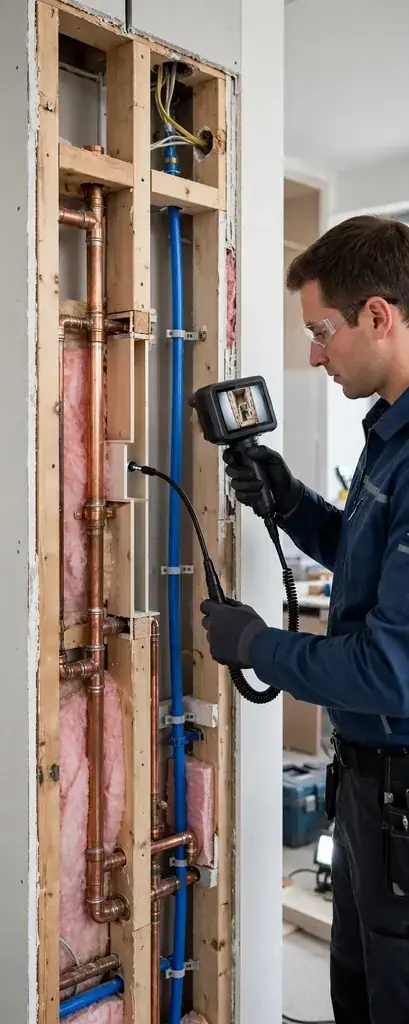
Acoustic listening equipment then follows the sound of escaping water through the concrete until it peaks, marking the spot where the pipe is leaking. If the line is quiet, tracer gas can confirm the exact point where gas escapes at the surface. ProLine Leak Fix Pros uses this sequence in Snohomish County garages so that, if a repair is needed, only the confirmed section of floor is opened.

What to Do While You Arrange Help
Keep the area working in your favor. Move cardboard, rugs, and stored items off the wet patch, since they trap moisture and hide the spread. Run a fan across the floor to dry the surface, which makes new seepage easier to see. Take a dated photo each day from the same angle, because slow growth is hard to judge from memory but obvious in pictures.
If the meter test shows a leak, you can close the main shutoff overnight or while away to slow the loss, noting whether the patch dries in the meantime. Avoid parking a heavy vehicle on a patch that sits over a suspected leak, because soil washed away below the slab can leave it poorly supported.
Storage habits decide how much a wet floor costs you. Cardboard boxes wick moisture quickly and pass it to everything inside them, while plastic bins on small risers survive the same patch unharmed. While the cause is being sorted, lift anything paper, fabric, or unfinished wood off the slab, especially over the wet area. It is a small, unglamorous step, but it is often the difference between a plumbing repair and a plumbing repair plus a pile of ruined belongings nobody needed to lose.
Conclusion: Sort the Cause Before You Treat the Floor
A wet garage floor on a dry week is not a mystery to live with. It is a sorting problem with three answers, and the tape test plus the meter test usually name the right one in a day or two. If the evidence points under the slab, have the line located precisely before any concrete comes up. Call ProLine Leak Fix Pros at (425) 380-0028. We serve Lynnwood around the clock and will confirm the source with acoustic and thermal imaging detection.