In This Article
Most homeowners never go into their attic, and honestly, most should not. Walking an attic means stepping only on joists, over insulation, in heat or cold, with nails overhead. The good news is that you do not need to cross the attic to learn a lot from it. The view from the hatch, with a strong flashlight and a few minutes of patience, reveals most of the signs that a leak is active above your ceilings.
Attic leaks come from two directions: down through the roof, and up from the plumbing and fixtures below. Both leave evidence you can read from the hatch: stained decking, daylight where it should not be, damp or matted insulation, and smells that drift down into the house. This guide gives you the safe hatch checklist, how to read what you see, and how professionals trace the water to its true entry point.
The Safe From the Hatch Checklist
You need a flashlight, your phone camera, and five unhurried minutes. Work through these steps without stepping off the hatch frame:
- Smell first: a musty or earthy odor rising from the attic points to damp material somewhere above
- Sweep the flashlight slowly across the roof decking: look for dark stains, streaks, or drip lines on the wood
- Look for daylight: with the hatch light off, any pinpoints of light through the roof mark holes or failed flashing points
- Scan the insulation: matted, darkened, or displaced insulation shows where water has landed or dripped through
- Check around penetrations you can see: vent pipes, chimneys, and exhaust fans are the most common leak sites
- Note anything wet or stained in a line: water travels, and streaks often point uphill toward the entry
Take photos as you go. If you call for help, those hatch photos tell a technician exactly where to start.
Reading Stains, Streaks and Insulation
Roof decking keeps a history book. Fresh leaks leave dark, sharp edged stains that are damp to the story of recent rain. Old stains fade to lighter rings with dry centers and usually mark a problem that was repaired or that appears only in certain storms. Streaks running down a rafter or along the decking seam show the travel path, and the top of the streak is always closer to the source than the bottom.
Insulation tells the landing story. A round matted patch below a vent pipe suggests dripping at that penetration. A wide dark area with no clear center suggests condensation or a slow, spreading source. White or dark spotting on the decking underside in winter can be frost and moisture from the house side, which points to air leaks from below rather than roof failure.
Frost on the underside of roof decking is a winter pattern worth recognizing from the hatch. It looks like white glitter or a pale coating on the wood and nails, and it forms when moist house air leaks into a cold attic and freezes there. On a sunny day it melts and drips, which can mimic a roof leak stain below. The fix for frost is air sealing and ventilation from the house side, not roofing work, so telling the two apart before calling anyone saves a misdirected repair.

Roof Leaks vs Plumbing Leaks Above the Ceiling
Timing separates the two families. Roof leaks follow weather: they appear during or just after rain, worsen in wind driven storms, and pause in dry weeks. Plumbing leaks ignore weather. A supply line, a shower valve, or a drain joint above the ceiling leaks on its own schedule, often steadily, and the stain below grows in dry weather too.
Location helps as well. Stains that align with bathrooms, laundry rooms, or known pipe runs deserve plumbing suspicion, especially in Lynnwood homes where second floor bathrooms sit above living spaces. A stain that grows in a dry spell is a plumbing problem until proven otherwise, and it will not wait politely for the rainy season.
Bathroom exhaust fans are a quiet culprit in many attic moisture cases. A fan that vents into the attic instead of outside dumps a shower's worth of steam above the ceiling every day, wetting insulation and decking from below. From the hatch, look for a fan duct that ends loose in the insulation or points at the decking instead of running to a vent. If your attic moisture is worst above a bathroom, that duct belongs at the top of the suspect list, ahead of the roof itself.
What Not to Do From the Hatch
A few cautions keep a look from becoming a project. Do not step onto insulation or drywall between joists; neither holds weight, and a foot through the ceiling is a common and expensive accident. Do not move insulation around to hunt for a leak in the dark; you will disturb the evidence and possibly the asbestos free but irritating dust of older material. And do not seal a stain from below or paint over the ceiling mark until the source is known, because the leak will simply keep working in the dark.
If the stain below is growing fast, or water is actively dripping, that is past hatch inspection. Protect the room below, and get help while the trail is fresh.
Safety has one more layer: attics hold hazards beyond footing. Exposed nail points through the decking, low clearance, extreme summer heat, and old wiring all argue for keeping your inspection at the hatch with a light, exactly as this guide suggests. If you ever do need closer access, that is a job for someone with boards, a mask, and experience. The hatch view plus photos gives a professional everything needed to plan that closer look safely.
How Professionals Trace Attic Water to Its Source
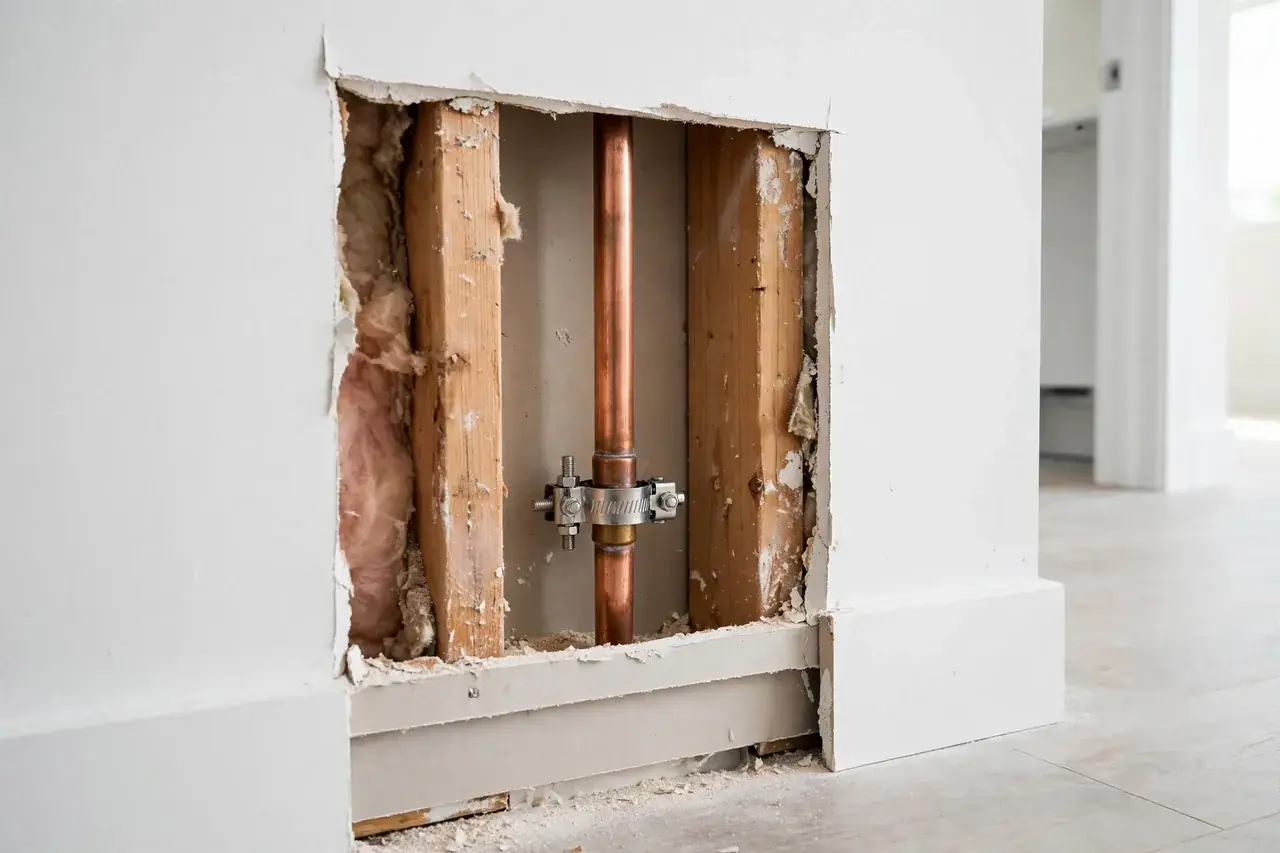
Professionals start where you did, at the hatch evidence, then follow the water uphill and upstream. Moisture meters test the decking, insulation, and the ceiling below to map the full wet area, which is almost always larger than the visible stain. Thermal imaging shows the cool trail of active water through the ceiling and can separate a live leak from an old stain in one pass.
For plumbing suspicion, ProLine Leak Fix Pros isolates and pressure tests the lines serving the rooms below the stain, and uses acoustic listening to locate an active escape. For roof suspicion, the stain map narrows the search to the penetrations and seams directly uphill. Either way, you get a named entry point, not a guess, and the repair opens the smallest possible area.
Record keeping turns one look into useful evidence. Photograph the same stain each month from the hatch, with a coin or ruler in frame for scale if you can manage it, and note the weather of the preceding days in the photo caption on your phone. Growth after rain points one way; growth in dry weeks points the other. Three months of that simple log can do what a single visit cannot: prove the pattern, not just the presence, of the leak.
Five Minutes at the Hatch Beats a Surprise Through the Ceiling
Your attic reports its leaks early and quietly: a stain darkening, insulation matting, a smell drifting down. The hatch view catches all of it safely, as long as you check a couple of times a year and after any ceiling stain appears below.
See something on the checklist? Photograph it, note whether dry weather changes it, and get the source traced before the ceiling below becomes the messenger. Attic leaks are patient, but they are never free.