In This Article
The basement stays dry for weeks, sometimes all summer. Then a real rain arrives, and within hours there is a damp line at the base of one wall, a puddle in the corner, or a wet stripe across the floor. By the time the sky clears, the water is already retreating. Rain-only basement leaks frustrate homeowners because the evidence keeps washing itself away.
The timing, though, is the biggest clue you will ever get. A leak that follows storms is being fed from outside the house, and outside water follows a short list of roads: roof runoff, yard grading, foundation joints, and window wells. This guide shows you how to read storm timing like a professional, which outside checks matter most, and how a tracer confirms the exact entry point.
Storm Timing: The Clue That Narrows Everything
Start by keeping a simple rain log. Note when the rain starts, how hard it falls, and when the basement first shows water. A leak that appears during the first hour of a downpour usually comes from roof water dumped close to the house, through short downspouts, overflowing gutters, or a window well that fills fast. Water arriving many hours into steady rain, or the day after, suggests soil that saturates slowly and then presses groundwater against the foundation.
Wind direction belongs in the log too. A wall that leaks only when rain blows from one direction points to an above grade entry, such as a joint, a crack that starts higher on the wall, or siding and flashing trouble. In Lynnwood, where fall and winter storms can last for days, these details separate a gutter problem from a groundwater problem quickly, and they cost nothing but attention.
The Usual Entry Routes for Rain Water
Most rain-only leaks enter at predictable places. The cove joint, where the basement floor meets the wall, is the classic entry, because groundwater pressure pushes water through that seam when the soil outside is saturated. Vertical cracks in a poured wall can weep in the same conditions. Tie holes and pipe penetrations offer smaller roads in.

Above the soil line, look at window wells that collect roof water faster than they drain, and at basement windows whose seals have aged. Also consider the yard itself. Soil that has settled against the house forms a shallow bowl that holds water against the wall after every storm. A leaking spot that sits below a settled section of yard, a short downspout, and a full window well is rarely a coincidence. The water is simply collecting at the lowest, weakest point and working through.
The height of the entry mark is evidence too. Water that stains the wall several inches above the floor, or drips from a crack partway up, entered at that height or above, which points back to surface water and grading rather than deep groundwater. Water that only ever darkens the bottom edge and the floor joint fits the groundwater and cove joint pattern. Run a fingertip along the wall after a storm, from high to low, and note where dampness starts. That topmost damp point is roughly the level the outside water reached.
Outside Checks to Run Before the Next Storm
Walk the outside of the leaking wall with fresh eyes:
- Do downspouts discharge right at the foundation, or carry water several feet away?
- Are gutters above the leaking wall clogged, sagging, or overflowing in moderate rain?
- Does the soil slope away from the house for the first several feet, or tilt back toward it?
- Is mulch or soil piled high enough to hold water against the wall above the footing?
- Are window wells clear of leaves, and does each well have a working drain at its base?
- Do sidewalks or patios along the wall slope toward the house and funnel water to one joint?
Fix the obvious items first. Extending a downspout and regrading a settled strip of soil solve a surprising share of rain-only leaks, because they remove the water supply rather than fighting the water at the wall.
How Professionals Trace a Rain-Only Leak
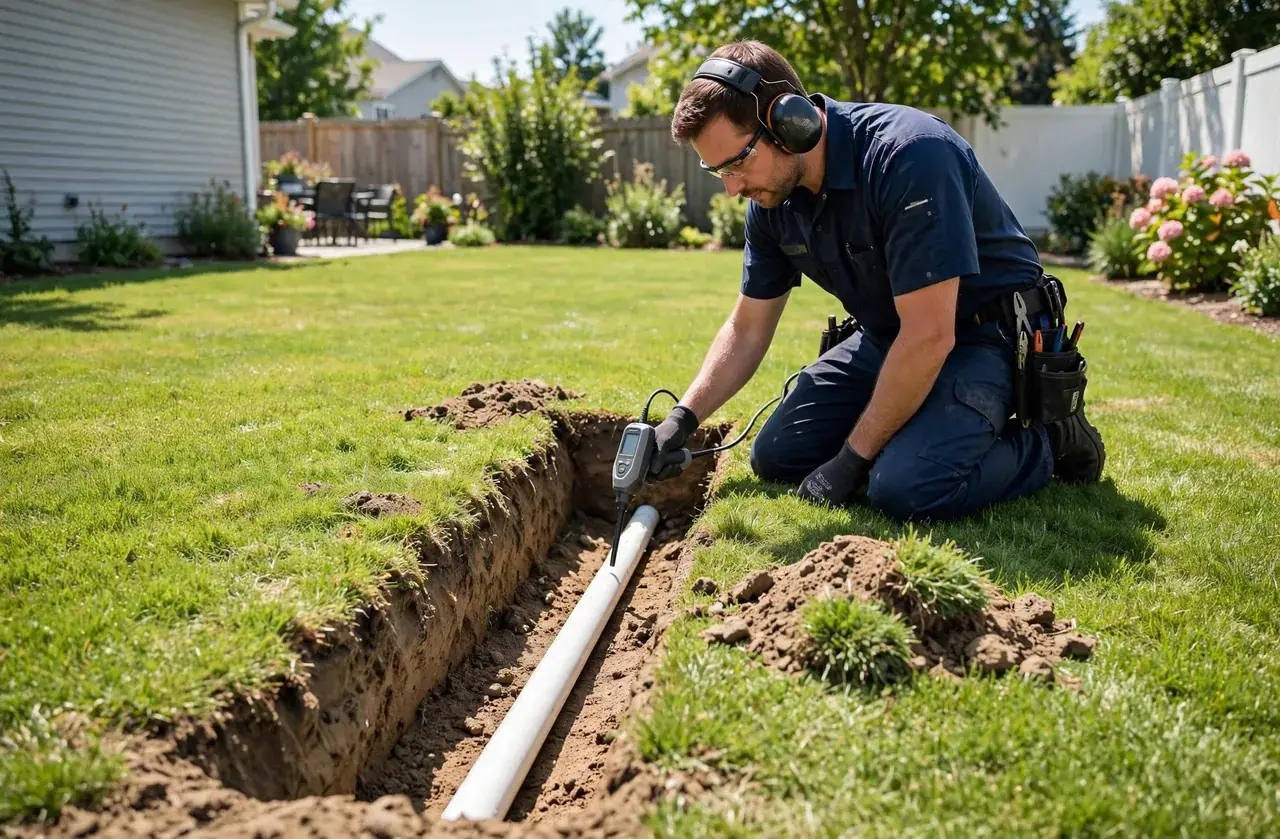
When the entry point is not obvious, pros reproduce the storm in a controlled way. A technician wets one suspect area at a time with a hose, starting low and working up, while a second person watches inside for the first sign of moisture. This flood testing isolates the entry far better than waiting for real rain, because only one road is wet at a time.
Moisture meters map the damp pattern inside the wall and floor, showing whether water spreads from one joint or rises evenly along the wall, and thermal imaging can outline the cool, wet path behind finished surfaces. The plumbing is also ruled out with a meter test, since a small supply leak that happens to be noticed after rain can send the whole search in the wrong direction. ProLine Leak Fix Pros uses this step by step tracing in Snohomish County basements so the repair lands on the true entry point.
Take care with hose testing around electrical and finished areas. Keep water low and controlled, work one small zone at a time, and give each zone enough minutes for water to travel before deciding it is innocent. Rushing the test is the classic mistake: a wall can take ten minutes or more to show a slow entry, and a zone cleared too quickly stays on the suspect list forever. A patient, logged test on a dry day beats three storms of guessing, because the conditions are yours to control.
Fixes That Match the Real Cause
Good fixes follow the diagnosis. If roof water is the supply, the answer is gutters that carry the full load, downspouts that end well away from the house, and wells that drain freely. If grading holds water against the wall, rebuilding the slope and lowering soil against the foundation removes the pressure at its source. A single weeping crack or joint may need sealing from the appropriate side once the outside water load is reduced.
What rarely works is coating the inside of the wall and hoping. Interior coatings fight the last inch of a journey that starts in the yard, and trapped water usually finds the next weakest joint nearby. Treat inside measures as a complement to outside water management, not a substitute for it, and the basement usually stays dry through the next storm season.
Keep expectations honest about older foundations. A wall that has wept at one joint for years may have mineral deposits and fine cracks that weep again under extreme storms even after grading is corrected, simply because the path is established. That does not mean the outside work failed. It means the joint itself has become a planned second step once the water load is reduced. Sequence matters: reduce the supply first, then seal the proven entry, then judge the result over a full wet season.
Conclusion: Use the Storm as Your Diagnostic Tool
A basement that leaks only when it rains is telling you its source is outside and weather driven. Log the timing, clear the gutters and grading faults, and test suspect areas one at a time. If the entry point stays hidden, or the water keeps winning, call ProLine Leak Fix Pros at (425) 380-0028. We serve Lynnwood around the clock and will trace the exact path the water takes so the fix is done once and done right.