In This Article
Few sights worry a homeowner faster than a brown ring spreading across the ceiling below the bathroom, or worse, water actively dripping through a light fitting after someone takes a shower. The ceiling looks like the problem, but it is only the messenger. Somewhere in the bathroom above, water is escaping and finding the easiest path down.
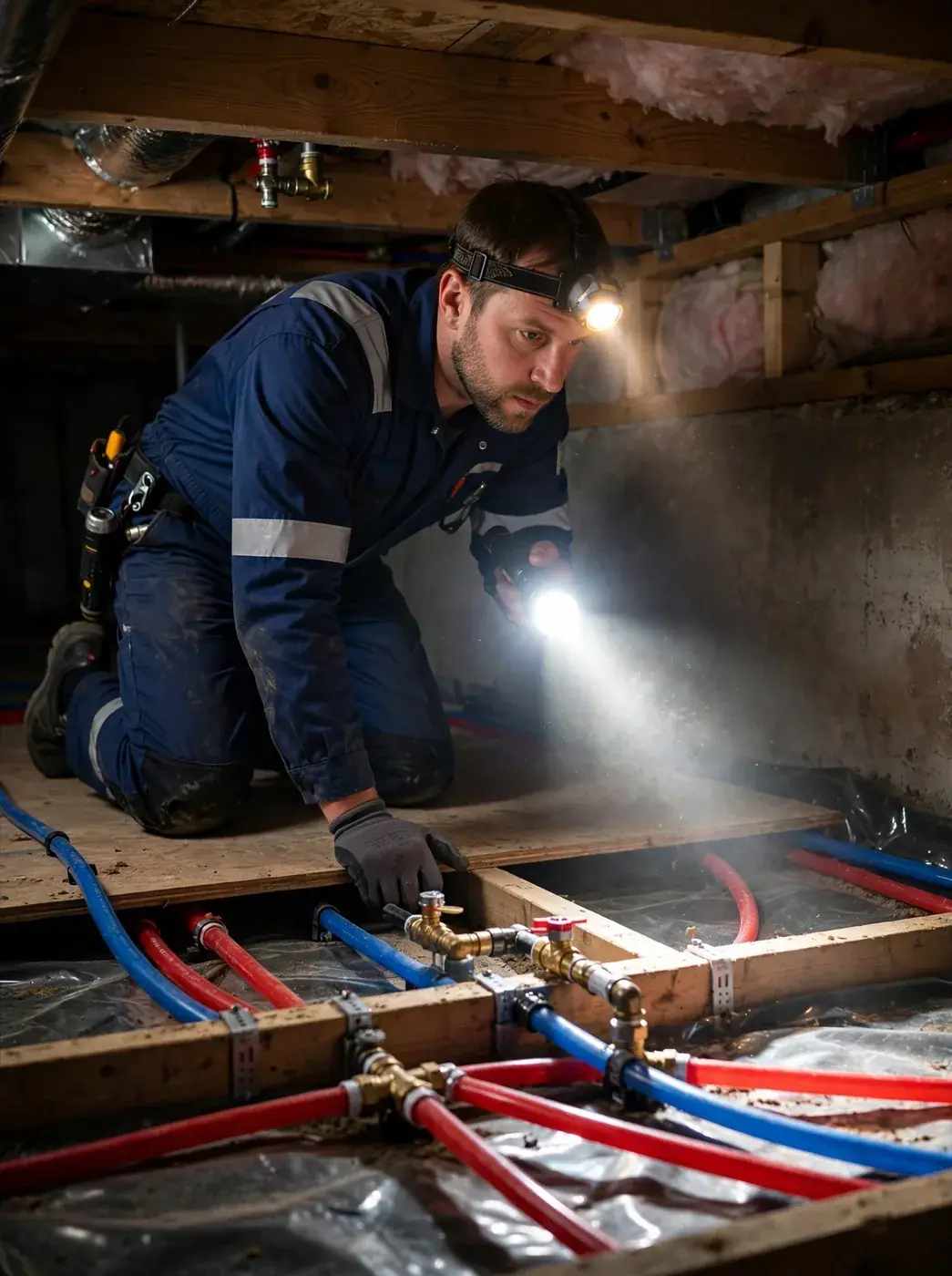
The good news is that a bathroom really only has four usual suspects: the tub or shower drain, the shower valve and its pipes, the toilet, and the supply lines. Each one leaks on a different schedule, tied to how the bathroom is used. This guide shows you how to read those patterns and run simple, controlled tests, so the repair targets the right fixture and your ceiling only gets opened if it truly has to.
First, Limit the Damage in the Next Hour
Before any detective work, reduce the water load. Stop using the bathroom above the stain if you can, and use another bathroom for showers. Place a bucket under any active drip, and if water is bulging the ceiling paint, the pocket of water is heavier than it looks, so keep people and furniture clear of that spot.
If the drip is steady even with the bathroom unused, shut off the water supply to that bathroom or to the house at the main valve. Take a photo of the stain with a coin beside it for scale, and mark the edge of the damp area with a light pencil line and the date. That outline becomes your growth monitor: if the damp patch crosses the line, water is still getting in. In Lynnwood homes with bathrooms stacked over kitchens and living rooms, a weekend of normal showering through an active leak can turn a small repair into ceiling, flooring, and cabinet work, so these first steps genuinely matter.
One last protective step: if the ceiling is in a room you use daily, move valuables and electronics out from under the stain until the source is fixed, because a ceiling that has been dripping politely can release a larger pocket of water without warning.
The Four Usual Suspects Above the Stain
Each suspect has a signature. The tub or shower drain and its trap leak only while water drains away, so the ceiling gets wet during and shortly after a bath or shower, then dries. The shower valve, hidden inside the wall, can leak when the shower runs, and a supply pipe feeding it can leak all the time.
The toilet offers two possibilities: a wax ring that lets flush water escape at the floor, or a supply line and tank parts that drip quietly between uses. Finally, pressurized supply lines to any fixture can pinhole or loosen and drip around the clock. The stain's position helps too. Water runs along joists and pipes before it drops, so the stain may sit a foot or two away from the true source, but it is almost always in the same general zone as the guilty fixture.
There is also a quiet fifth suspect worth knowing: the tub overflow drain. The overflow plate on the inside wall of the tub connects to the drain through a gasket that ages and flattens. It only leaks when bath water rises high enough to reach it, or when a shower user lets water splash against it steadily, so it can puzzle homeowners for months because normal shallow baths stay dry. If the ceiling grows after long, full baths but not after showers, put the overflow gasket on your list. The same goes for tired grout and caulk around a tub or shower enclosure, which let splash water into the wall on a schedule set by bathing habits rather than by plumbing use. Both are surface and seal problems, and both are kind enough to follow a pattern once you start matching stain growth to what actually happened in the bathroom that day.
Usage Tests That Separate Them, Step by Step
Controlled testing beats guesswork. Run these tests one at a time, checking the ceiling after each:
- The rest test. Leave the bathroom unused for a full day. If the ceiling keeps dripping or the stain grows, a pressurized supply line is leaking, and testing can stop there.
- The toilet test. Flush the toilet several times and watch the ceiling. Growth after flushing, with no bathing, points at the wax ring or the toilet drain connection.
- The bucket shower test. Run the shower by filling buckets from the showerhead and pouring them down a different drain, so the shower drain itself stays dry. If the ceiling still gets wet, the valve or its pipes inside the wall are the problem.
- The drain test. Now let the shower run normally into its own drain. Wetness that appears only now points at the drain, trap, or shower pan.
- The splash test. If all plumbing tests stay dry, spray water at the door, curtain, and tile grout lines. Leaks that need splashing water point at seals and surfaces, not pipes.
Write down which test made the stain grow. That single note turns a vague worry into a pointed repair plan.
What Not to Do With a Wet Ceiling
The strongest urge is to cut the ceiling open immediately. Resist it until testing narrows the source, because a hole in the wrong bay shows you nothing but dry joists while the leak continues two feet away. Painting over the stain is the other common mistake: paint hides the growth monitor you need, and trapped moisture keeps feeding damage inside the ceiling.
Also avoid running the shower extra long to see if it gets worse. A stain that is already growing has told you enough, and every extra gallon adds weight to soaked drywall. Finally, do not assume the nearest fixture is guilty. Water travels sideways along the top of the ceiling drywall, so the tub can stain the ceiling over the hallway while the ceiling under the tub stays clean.

How Professionals Pinpoint the Leak Without Demo
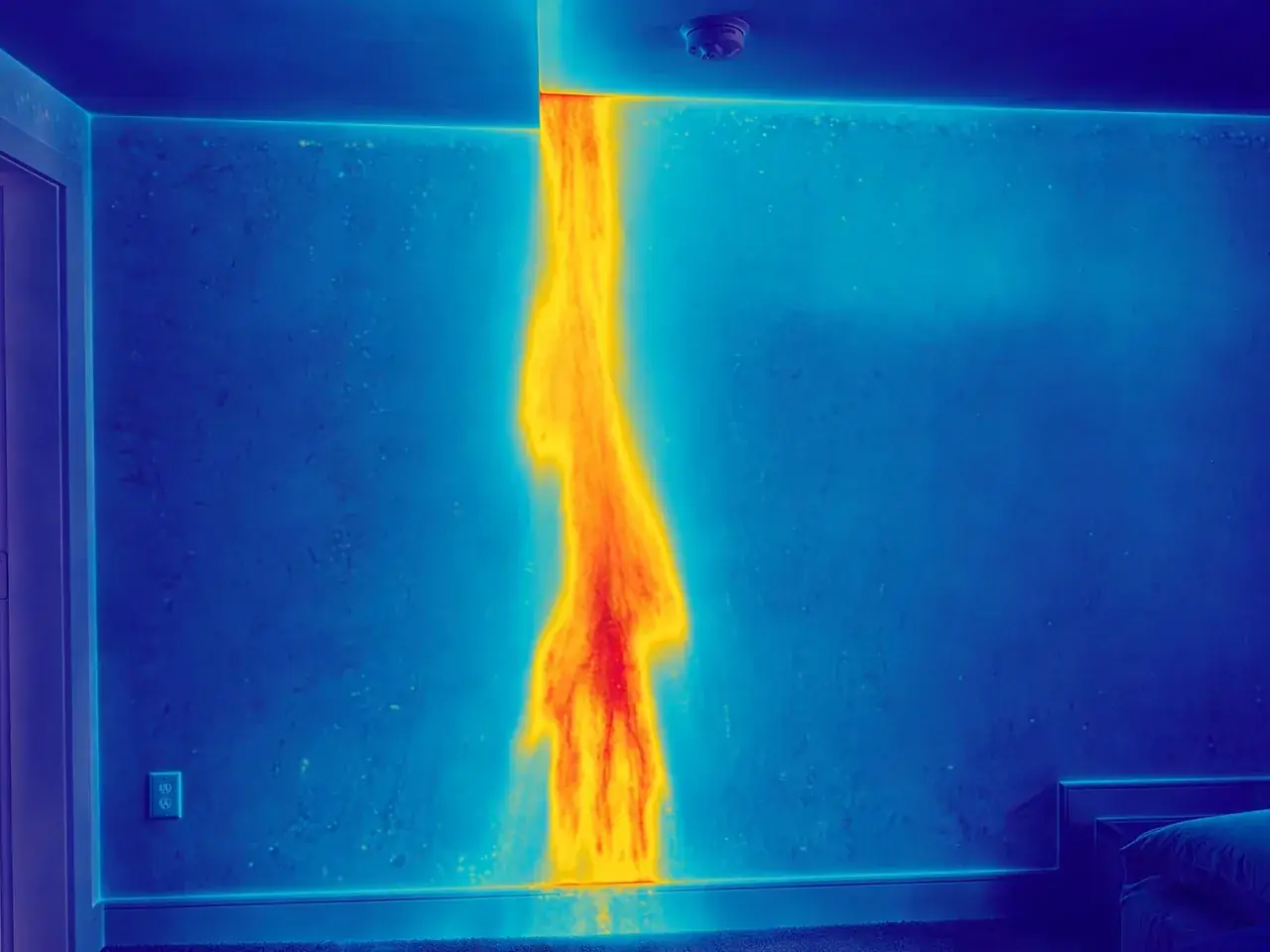
Professionals repeat your usage tests, then add instruments. A moisture meter reads how wet the ceiling and the bathroom floor really are and maps the wet zone, which usually points back toward the source. Thermal imaging can show the cool path of water spreading from a drain or supply line, especially right after the fixture runs.
When the suspect hides inside a wall or under a tub, acoustic listening equipment picks up the sound of pressurized water escaping, and a small camera through an existing access panel can confirm a drain or valve fault visually. ProLine Leak Fix Pros follows this order on purpose: pattern first, instruments second, and only then a small, targeted opening if one is truly needed. Across Snohomish County, most bathroom through-ceiling leaks get located with no demolition at all.
The ceiling stain is a map, not the territory. Read the pattern of when it grows, and it will usually point at one fixture.
Conclusion: Let the Pattern Name the Fixture
A bathroom leaking through the ceiling below feels chaotic, but the cause is almost always one of four fixtures, and each one keeps its own schedule. Protect the room below, mark the stain, and run the rest, toilet, bucket, drain, and splash tests in order. The test that makes the stain grow names your suspect.
If the leak runs around the clock, the ceiling is sagging, or testing leaves you unsure, call ProLine Leak Fix Pros at (425) 380-0028. We are available 24/7 in Lynnwood and across Snohomish County to pinpoint the source and stop the damage at its start.