In This Article
It looks like someone dusted your basement walls with chalk. White, crusty patches bloom on the concrete or block, sometimes fluffy, sometimes hard, and they keep coming back after you brush them off. This is efflorescence, and while the powder itself is harmless, it is a written record of something important: water is moving through your basement wall, regularly enough to carry minerals with it.
This guide explains how efflorescence forms, how to tell it from look alikes, what its patterns say about the water path, and when that moving water points to a plumbing leak that needs finding rather than a drainage issue to manage.
How Efflorescence Forms, Step by Step
Concrete, block, brick, and mortar all contain natural salts and minerals, and all of them are slightly porous. When water enters the wall from the wet side, it dissolves some of those salts as it travels. The water migrates through the pores toward the dry side, your basement air, and evaporates at the surface. The salts cannot evaporate, so they stay behind as white crystals: efflorescence. Brush them away and the process quietly rebuilds them as long as water keeps making the trip.
Three ingredients are required: salts in the material, water moving through it, and a surface where that water can evaporate. Remove any one and the powder stops. In practice you cannot remove the salts from masonry, and the basement surface will always be a drying surface. That leaves the water as the only ingredient worth chasing, which is why efflorescence should always start a conversation about where the water is coming from and how long it has been traveling.
What Efflorescence Is Not: Look Alikes to Rule Out
Two look alikes cause most of the confusion:
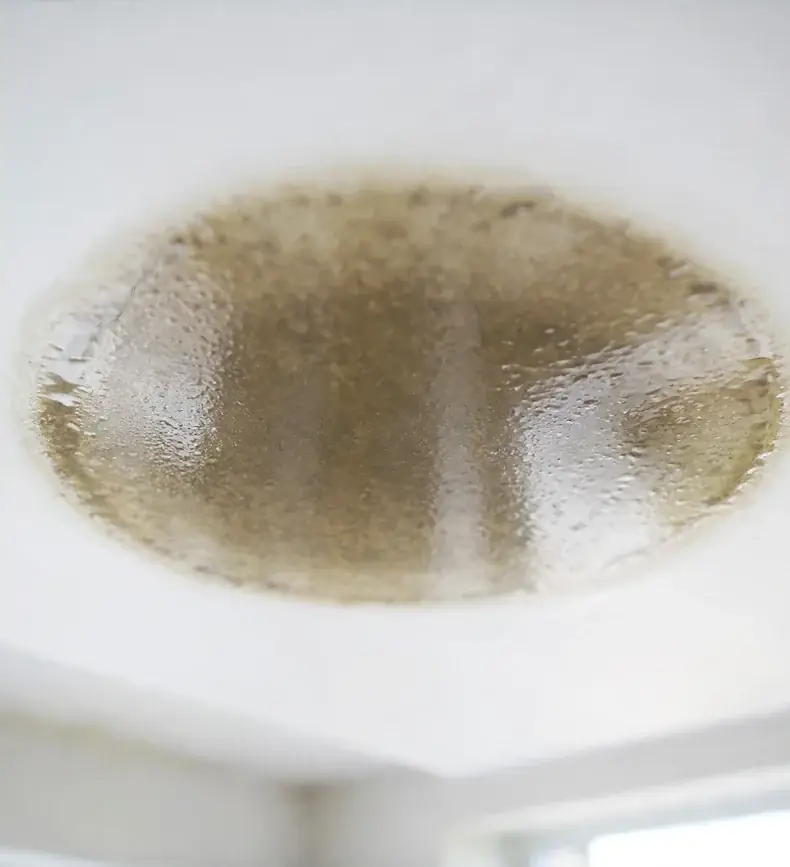
- Mold growth: usually appears in patches of green, black, or gray, grows on the surface of paint, wood, or stored items, and feels or smells organic. Efflorescence is white to light gray, crystalline, and grows out of the masonry itself.
- Paint failure: peeling or bubbling paint on a basement wall is often efflorescence working underneath it, pushing the paint off as crystals grow between the wall and the coating.
- A simple water stain: stains are flat discoloration. Efflorescence has texture you can feel, from powdery to hard and crusty.
A quick field test helps: efflorescence dissolves in water and a small dab of it fizzes and disappears with a drop of household vinegar, while surface mold does neither. The distinction matters because the responses differ. Surface growth calls for cleaning and drying. Efflorescence calls for finding the water path through the wall, since the crystals are only the visible end of a journey that starts on the other side.
Read the Pattern: Where the Powder Grows
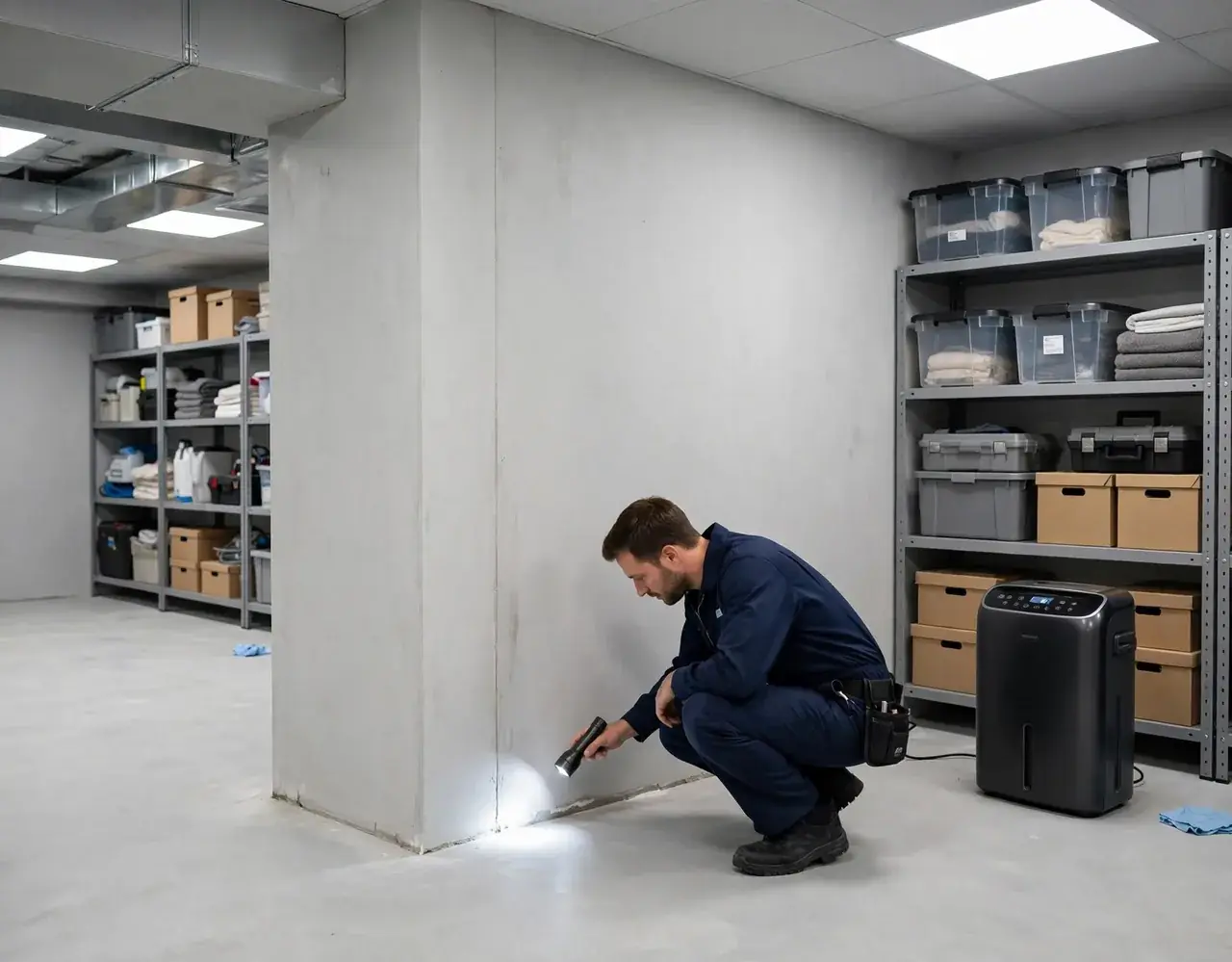
Efflorescence maps the water's route. Powder low on the wall, in a band near the floor, suggests water rising or entering at the footing level, often tied to ground water or a high water table after wet weather. Powder in a patch beside a plumbing wall raises a different suspect: a slow leak in the pipes inside or behind that wall, feeding the masonry steadily in every season. Lines and streaks running down from a crack or a tie hole show water using that exact path through the wall.
Seasonality is your second clue. Efflorescence that blooms after heavy rain and fades in dry months is riding weather driven water: grading, downspouts, or exterior drainage. Powder that grows steadily all year, rain or shine, points at a constant indoor source, and the most constant indoor sources are pressurized supply lines and drains. In Lynnwood's long wet season the two can overlap, which is why the pattern, the timing, and a moisture check together beat any single guess.
Homeowners sometimes ask whether they can simply seal the wall and be done. Sealers and waterproof coatings have their place, but only after the water question is answered, because a coating applied over an active water path does not stop the water. It redirects it. Moisture that can no longer evaporate at the coated patch travels further through the wall and blooms at the next uncoated surface, or builds pressure behind the coating until the coating itself blisters off. Worse, a sealed wall hides the efflorescence signal you were using to monitor the problem, so the first new evidence may be damage somewhere less visible. The correct order never changes: identify the water source, stop or redirect it at the source, let the wall dry fully, and only then consider whether a coating adds anything. A wall whose water has truly stopped needs no coating to stay powder free, and its clean surface becomes your proof that the fix worked.
When Efflorescence Points to a Plumbing Leak
Some efflorescence is a drainage story, handled with grading, gutters, and exterior waterproofing. But call it a leak investigation when you see these traits:
- Growth in one focused patch rather than a general band along the wall
- Steady growth in dry weather when ground water should be falling
- A musty smell or damp floor near the same section of wall
- Plumbing in or behind that wall, especially supply lines or a bathroom above
- A water meter that moves when the house is using no water
A leaking line inside a basement wall or under the slab beside it keeps the masonry wet from within, and the powder keeps blooming no matter how the yard is graded. Sealing the inside surface in that situation backfires: the water is still in the wall, and coatings trap it, pushing damage into the material itself. Find the water's source first, then decide what the wall needs.
How Professionals Trace the Water Behind the Powder
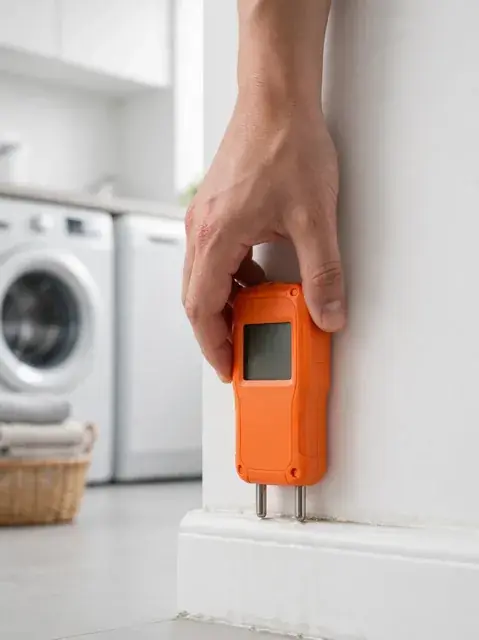
The investigation follows the moisture, not the crystals. Moisture meters compare readings across the wall, at the powder and well away from it, and the gradient points toward the entry. The floor and slab beside the wall are checked too, since water under a slab can feed a wall base. Thermal imaging can reveal a cool, damp zone spreading from a line or fitting, and acoustic listening tests the pressurized pipes in the suspect area. A meter test at the house level confirms whether water is being lost at all.
ProLine Leak Fix Pros uses this sequence on moisture intrusion inspections across Snohomish County, separating weather driven moisture from plumbing leaks, so a homeowner fixes drainage when drainage is the problem and fixes a pipe when a pipe is the problem, without paying for the wrong one.
Keep a simple wall diary while you decide: photograph the worst patch with a ruler beside it once a month, same angle, same light. Powder that holds steady across a wet season is a wall managing old moisture. Powder whose border creeps outward month by month is a wall with a live water supply, and that diary turns your suspicion into dated evidence any specialist can act on.
Conclusion: The Powder Is the Symptom, the Water Is the Story
Efflorescence itself will not hurt your basement. It brushes off, dissolves, and means nothing on its own except this: water has a working route through your wall. Read where the powder grows and when it grows, rule out the look alikes, and chase the water path the crystals are mapping for you. Stop the water and the powder stops with it, permanently.
If the white powder on your Lynnwood basement walls grows in one patch, grows in dry weather, or keeps company with damp and musty smells, have the water traced properly. ProLine Leak Fix Pros finds whether a hidden leak is feeding your walls, so the fix addresses the source instead of the dusting.