In This Article
Read the Denial Letter Like a Map
A denial letter feels final, but it is really a map. Insurers deny claims using specific policy wording, and the letter usually names the exact clause: a slow leak exclusion, a maintenance issue, or damage that the policy treats as long term rather than sudden. Read for those phrases first, before you read for tone. The reason given decides what evidence could change the answer, and what cannot.
Keep the letter, your policy, and every photo and bill together in one file from this point on. Appeals and second reviews are won with organized records, not with frustration. This guide explains the reasons insurers give most often for leak claims, what each one really means, and how solid documentation, especially a professional detection report, gives a denied claim its best second look.
Also check what the letter asks of you. Many denials include an appeal window or a request for more information, sometimes with a deadline. Mark that date the day the letter arrives. Missing an appeal window over a calendar mistake is one of the most avoidable losses in the whole process. If anything in the letter is unclear, call the insurer, ask for the clause in plain words, and note the name of the person you spoke with and the date of the call in your file.
The Reasons Insurers Give Most
Most leak denials rest on a short list of arguments:
- Slow or long term leak: the damage shows the leak ran for weeks or months, and the policy only covers sudden events
- Wear and maintenance: the failed part is treated as an aging pipe, seal, or appliance that upkeep should have caught
- Late reporting: the loss was reported long after it began, which limited the chance to limit damage
- Source outside coverage: the water came from a cause the policy lists as excluded, such as groundwater entering from outside
- Damage versus repair split: the policy may cover damage the leak caused but not the plumbing repair itself, and the two get confused
- Weak documentation: no clear timeline, no photos from discovery, and no professional finding of the source
Notice how many of these turn on time and evidence. When did the leak start, when could it reasonably have been discovered, and what proves it? Those are exactly the questions good documentation answers.
Understand the sudden versus gradual split, because it sits under most of these reasons. Policies are generally built around sudden, accidental events: a pipe bursts, a hose fails, a fitting lets go. Damage that builds slowly is often treated as a maintenance matter. A hidden leak sits awkwardly between the two, which is why the discovery story matters so much. Showing that the leak was truly hidden, and that you acted at the first visible sign, addresses the exact worry behind the denial.
Why the Timeline Decides So Much
Hidden leaks create an honest problem: a pipe inside a wall can leak for a long time before any sign reaches a room. Insurers know this, but the claim file still needs a story that makes sense. A strong timeline shows when the first visible sign appeared, what you did in the days after, and when a professional located the source. Water bills help here. A bill that jumps in one month supports a recent change, while flat bills before it suggest the leak was not quietly running all year.
Photos with dates, meter readings from the week of discovery, and receipts for your first response steps all build that timeline. If you dried the area, called for detection, or shut off a zone, note it. A file that shows a homeowner who acted promptly once a sign appeared is much harder to dismiss as neglect than a file with a single photo and no dates.
Receipts tell the timeline too. A plumber visit, a detection invoice, or even a hardware store receipt for drying fans, each with a date, anchors your story in the real sequence of events. Keep your water bills for the months before discovery as well. Together they show a pattern: normal use, a change, a response. Assemble these before you write any appeal, so the letter can reference attachments the reviewer can verify instead of claims they have to take on trust.
How a Detection Report Changes the File
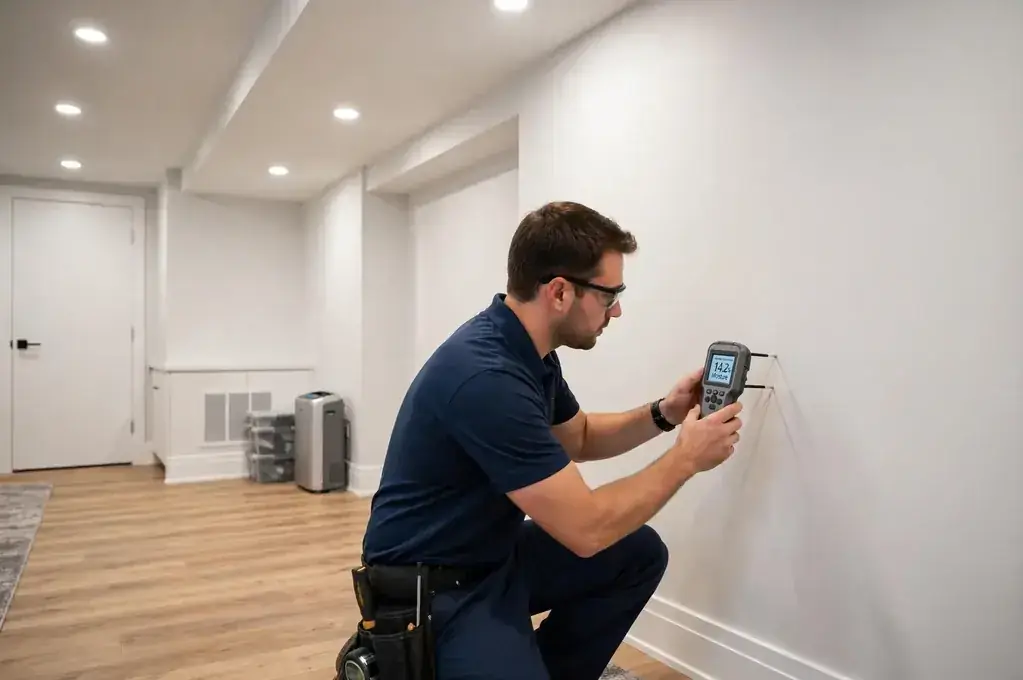
The single most useful document in a disputed leak claim is a professional detection report. It names the exact source, the methods used to find it, and the moisture pattern it caused. That turns a vague argument about damp into a specific, testable finding: this fitting, in this wall, confirmed by acoustic listening and thermal imaging on this date. Adjusters and reviewers can work with specifics. They cannot work with guesses, and neither can a repair crew.
A report also separates causes that policies treat differently. A sudden fitting failure looks different from slow corrosion, and drain damage looks different from a supply leak. When the report states the failure type clearly, the claim can be judged against the right clause instead of the wrong one. Many denied claims in the Lynnwood area are re examined once a precise, dated finding replaces the first rough description of the damage.
There is also a practical reason to locate the source quickly: the repair cannot be scoped without it. A reviewer who is told the leak is somewhere in the bathroom wall has nothing solid to reconsider. A reviewer shown a located fitting, photographs of the failure, and a moisture map has a defined loss to evaluate. Precision does not guarantee an outcome, and no honest professional will promise one, but vagueness nearly guarantees the denial stands as written.

Practical Steps After a Denial
If your claim is denied, move in order. First, ask for the denial in writing with the exact policy wording cited, if you do not already have it. Second, gather your timeline: dated photos, bills, meter notes, and any messages showing when you reported and responded. Third, get the source professionally located and documented if that has not happened yet. Fourth, write a short, factual appeal letter that answers the cited clause point by point and attaches the new evidence.
Stay calm and keep everything in writing. This guide is general information, not legal or insurance advice, and policy wording varies. For large losses, an independent professional who understands claims can review your file. Whatever route you take, do not let the underlying leak wait for the paperwork. A leak that keeps running while a claim is argued will keep damaging the home, and no outcome on paper undoes wet framing.
While the appeal runs, protect the home. Keep the leaking zone shut off or repaired, keep drying until moisture readings are normal, and keep photographing any change. If the damage grows while you wait, document that too, and tell the insurer in writing. A homeowner who mitigates carefully and keeps reporting is in the strongest possible position, whatever the final decision. The file you build serves the appeal, the repair, and your own peace of mind at the same time.
Facts Give a Denied Claim Its Best Second Look
Most leak denials are really arguments about time, cause, and proof. You cannot rewrite the past, but you can document the present precisely: a located source, a dated timeline, and records that show you acted as soon as a hidden problem became visible. That is the strongest honest case any homeowner can put in front of a reviewer.
If your claim was denied and the source was never professionally pinpointed, start there. Call ProLine Leak Fix Pros at (425) 380-0028 and get a clear, dated detection finding for your file and for the repair itself.