In This Article
Every faucet in the house runs fine except one. The kitchen tap pours like always, the shower feels strong, but the bathroom sink has slowed to a disappointing trickle. It feels strange, yet this is actually the friendliest kind of pressure problem, because the healthy fixtures prove your main supply, your pressure, and most of your pipes are fine.
When one faucet is weak, the cause lives within a few feet of that faucet: in its aerator, its valves, its supply lines, or the fixture itself. This guide walks that short distance in order, explains the few cases where a single weak faucet hints at something deeper, and shows how professionals confirm it when the simple checks come up empty.
Check the Aerator First, Always
The aerator is the small screen cap at the tip of the faucet, and it is the number one cause of a single weak tap. Its job is to shape the stream, and its fine mesh catches every grain of sediment that travels through your pipes. Over time the mesh clogs, and flow falls off a cliff.
Unscrew the aerator by hand or with a cloth wrapped wrench, rinse the screens, and soak them in vinegar if they are crusted with white mineral scale. Run the faucet briefly with the aerator off. If the flow is strong without it, you found the problem. Clean it or replace it, and make a note: heavy sediment at one aerator often means the others are collecting it too, especially after any water main work in your neighborhood.
While the aerator is off, shine a light into the faucet spout. Some faucets collect a second layer of grit right at the spout opening or in an internal screen. A toothpick and a rinse usually clear it. When you refit the aerator, hand tighten it snugly; over tightening with pliers cracks the housing and creates a spray leak at the base that looks like a new problem but is only a crushed washer.
The Angle Stops and Supply Lines
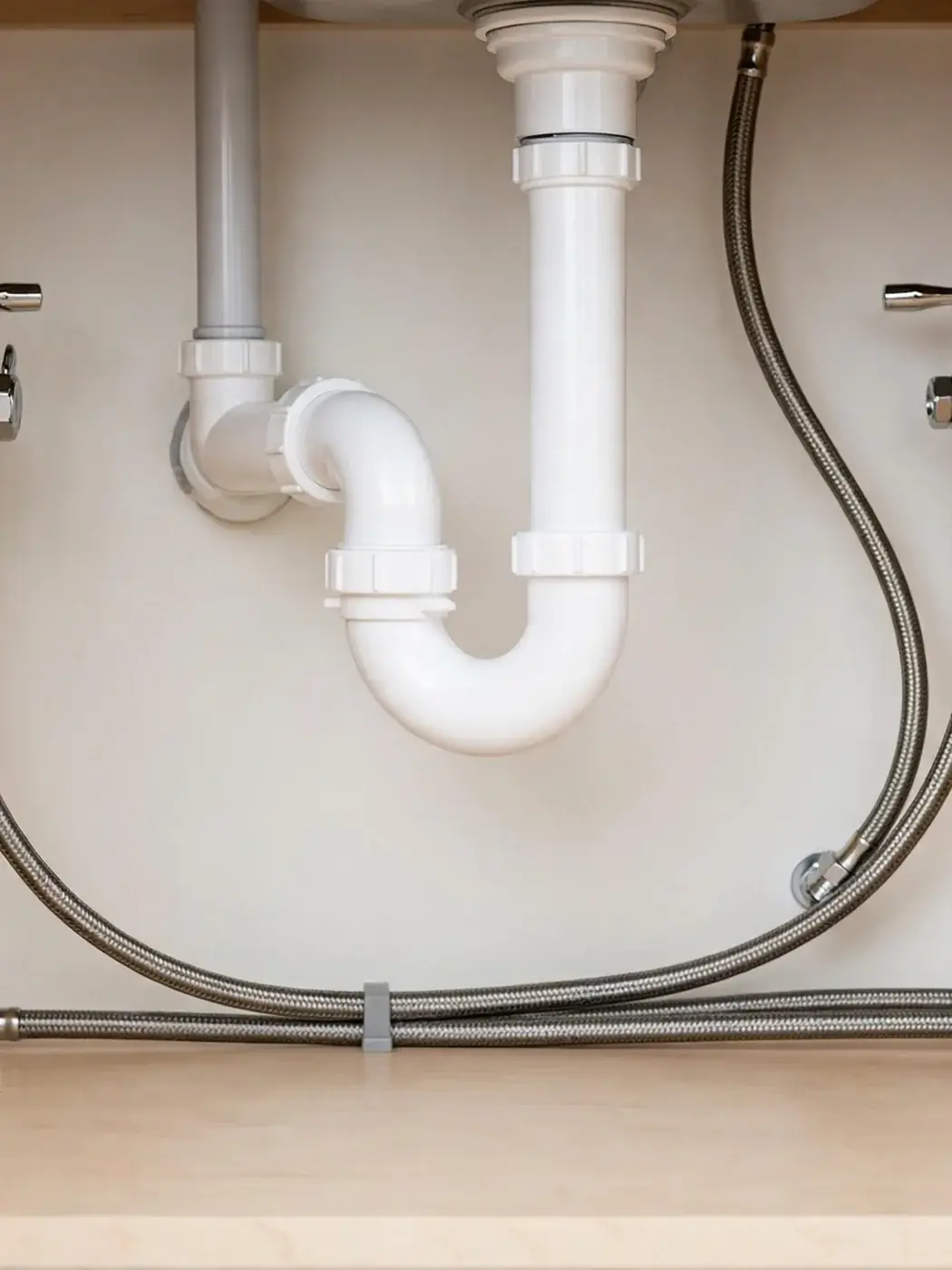
Under the sink sit two small shutoff valves, called angle stops, one for hot and one for cold. They are easy to bump during cleaning or storage, and older ones corrode internally until they no longer open fully. Turn each one fully counterclockwise and check whether flow improves. If one side, hot or cold, is weaker than the other, that split points right at its valve or its line.
The flexible supply lines between the stops and the faucet can also fail quietly. Some have built in screens that clog. Others kink, or their inner lining collapses with age. A simple test: if flow is weak from the faucet but strong from the supply line when tested into a bucket by a plumber, the faucet itself is the restriction. Homeowners should not disconnect pressurized lines casually, but knowing the test exists helps you understand the diagnosis.
Angle stops deserve a word of caution. A valve that has not moved in a decade can be stiff, and forcing it can start a drip at its stem. Turn gently, and if a stem weeps a little after being exercised, snug the small packing nut behind the handle a quarter turn. If the valve will not budge at all, leave it alone and note it: a seized shutoff is worth replacing on a planned day, not during a pressure hunt.
When the Problem Lives Inside the Faucet
If the aerator is clean and both supplies arrive strong, the restriction is inside the fixture:
- A worn cartridge: internal passages narrow with scale and seal wear, especially on the hot side
- Debris after repairs: a chunk of solder, tape, or sediment lodged in the inlet after nearby plumbing work
- A failing diverter or sprayer hose: on kitchen faucets, a clogged side sprayer or pull down hose can steal or block flow
- A frozen section: a faucet on an outside wall in a cold snap can ice up while the rest of the house runs fine
Note which side is weak. Hot only weakness at one faucet, with hot pressure fine elsewhere, usually means that faucet cartridge or its hot supply. Both sides weak at one faucet usually means the aerator or a shared passage.
Pull down kitchen faucets have one more hiding place: the hose and its inline filter where it connects under the sink. Sediment gathers there and the whole faucet weakens, sprayer and all. Bathroom faucets with waterfall or wide mouth designs can hide scale along their channels instead. The shared lesson is that modern fixtures have more internal real estate for grit to settle in, so a clean aerator no longer clears the fixture of suspicion.
How Professionals Confirm the Odd Cases
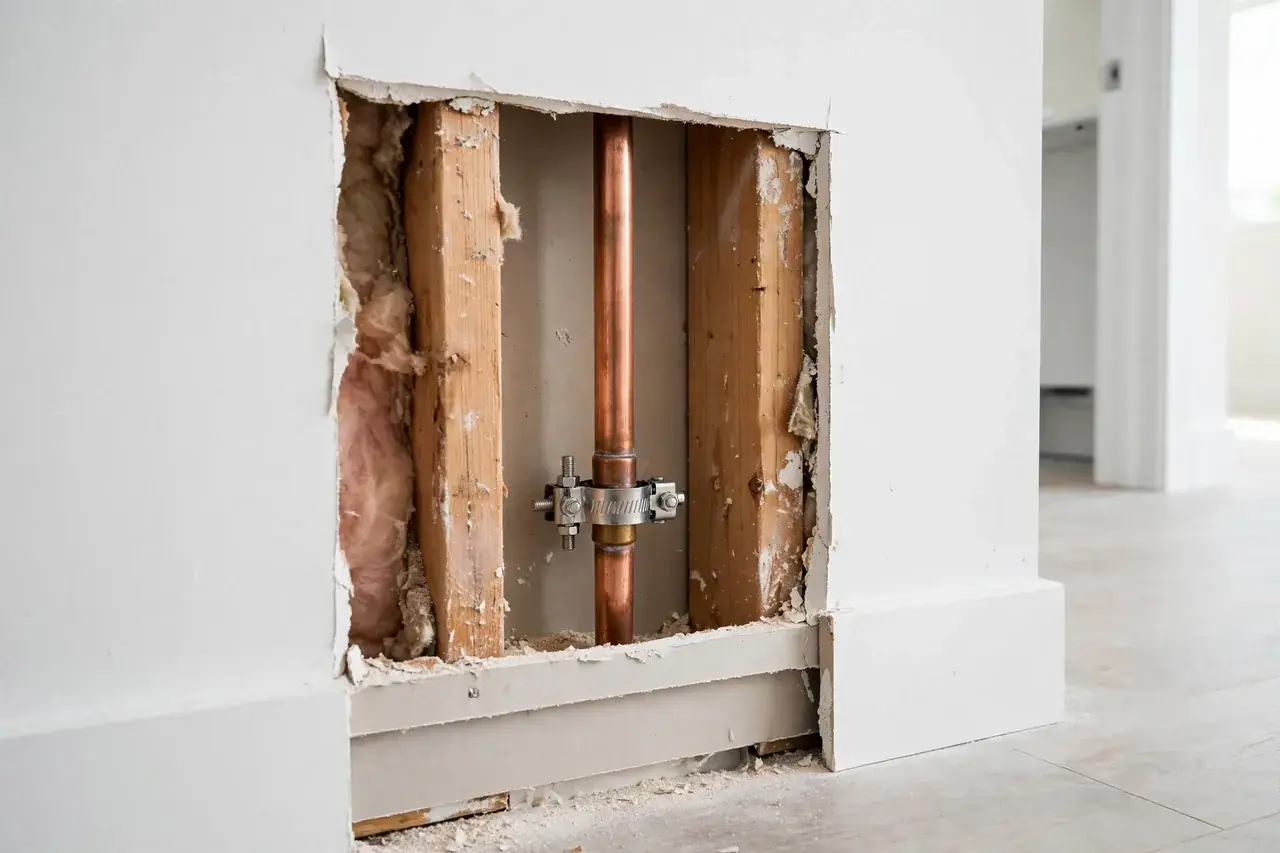
Once in a while, a single weak faucet is the first visible sign of a branch line problem: a partly crushed pipe, a corroding section of old galvanized line feeding one room, or a small leak in that branch that bleeds pressure before it reaches the tap. The clues are a faucet that keeps weakening after cleaning, dampness or a musty smell near that fixture, or a meter that moves with the house quiet.
Pros settle it with measurement instead of guesswork. They compare pressure at the problem fixture against a healthy one, isolate the branch, and pressure test it. If the branch loses pressure, acoustic listening and thermal imaging locate where. ProLine Leak Fix Pros does this kind of branch level diagnosis across Lynnwood and Snohomish County, which matters in older homes where one room often sits on its own aging run of pipe.
Branch problems in older Lynnwood homes have a familiar shape. A bathroom added years ago, fed by a long run of tired galvanized pipe, weakens one fixture at a time over a few years. Each faucet gets cleaned, each cartridge gets swapped, and nothing quite restores it. Pressure readings at the start and end of that run tell the story in minutes, and knowing the run is failing lets you plan its replacement instead of nursing it fixture by fixture.
Keeping Single Faucet Problems Rare
Most single faucet pressure problems are sediment stories, and a few habits slow them down. Clean aerators once or twice a year, and always after street work on the water main near your home, since flushed mains send a wave of grit through house plumbing. Exercise the angle stops under your sinks gently once a year so they do not seize in place.
If your home has old galvanized pipes, expect aerator clogs to return faster, because the pipes themselves shed rust from the inside. Recurring clogs at many fixtures are one of the classic signs that the piping is reaching the end of its life. That is a planning conversation, not an emergency, but it is better held early than after a line fails inside a wall.
There is one more preventive habit worth adopting: after any work that drains part of your plumbing, expect the aerators to catch the stirred debris. Run tubs and laundry first, since they have no fine screens, then clean the faucet aerators once the water runs clear. It takes ten minutes and prevents the classic mystery of three faucets weakening the day after an unrelated repair.
Conclusion: One Weak Faucet Is a Small Map
A single low pressure faucet narrows the search to a few feet of plumbing. Start at the aerator, check the angle stops and supply lines, then look inside the fixture. In most homes, one of those three stops holds the answer, and the fix is quick and inexpensive in effort.
If the faucet keeps weakening, the meter moves with everything off, or moisture shows up nearby, call ProLine Leak Fix Pros at (425) 380-0028. We will test that branch and pinpoint any hidden leak before it grows into wall damage.
If the fix turns out to be a fifty cent screen full of grit, that is not an anticlimax, it is the system working as designed. The aerator sacrificed itself to protect the fixture. Keep it clean and it will keep doing that job. And if your one weak faucet turns out to be the first whisper of a failing branch line, you will be glad you read the whisper early instead of meeting the shout later.