In This Article
A stain spreads across your living room wall, but every pipe on your side checks out dry. In homes that share walls, floors, or supply lines, the leak soaking your home may belong to your neighbor. Handling that well takes proof first and conversation second.
This guide walks through confirming the water is not yours, documenting the damage before you knock, talking to your neighbor and escalating in writing if needed, protecting your side, and how professionals prove the source.
First, Prove the Water Is Not Yours
Before any conversation with a neighbor, rule out your own plumbing. Water travels along joists, pipes, and slab edges, so a stain on a shared wall can come from either side. Start with your meter: turn off every fixture in your home and watch it. A still meter while moisture keeps arriving is a strong early sign that the source sits elsewhere.
Go further if you can. Shut off your main valve for a few hours and monitor the wet area. If it keeps growing while your system is fully off, your pipes are effectively cleared. Note the times, the readings, and what you observed. This calm homework protects you from paying for a problem that is not yours, and it makes the next step much easier.
Shared plumbing complicates the picture in attached homes. Some townhomes and condos share supply branches, drain stacks, or a single service line that splits late. In those buildings, your shutoff test may slow the moisture without stopping it, which still tells you the source is at least partly outside your unit. Note that partial result carefully, since it points the HOA and the technician toward shared infrastructure.
Document Before You Knock
Good records turn a hard conversation into a simple one. Photograph and video the damage with dates visible in your notes: stains, bubbling paint, warped flooring, and any active dripping. Photograph the progression every day or two, because growth over time proves an active, ongoing source.
Write a plain timeline: when you first noticed it, what checks you ran, when your water was shut off and the area still grew, and any earlier conversations. Save receipts for fans, drying help, or damaged belongings. If the home is a condo or townhome in the Lynnwood area, note shared walls, shared supply lines, and any HOA rules you know about. Facts gathered early stay useful no matter how the situation develops.
Keep copies of everything in one folder: photos with dates, your timeline, meter readings, letters, and receipts. If the situation stays friendly, the folder simply helps the repair. If it does not, the same folder is what an HOA board, a mediator, or an insurer will ask for first. Organized records also keep your own account consistent, which matters when weeks pass between conversations.
Talking to Your Neighbor, and What Comes Next
Most neighbors fix a leak quickly once they know it exists, since the same water is usually damaging their side too. Knock with information, not accusations: show the photos, share your shutoff test result, and suggest they check their side and their meter. Offer to coordinate access if a technician needs to see both homes.
If a knock does not work, move in writing. A polite dated letter or email creates a record. Landlords, property managers, and HOAs come next for rentals and shared wall communities, and your own insurance company can advise on protecting your claim. Keep every step factual and documented. The goal is a repaired pipe and a dry wall, and clear records get there faster than arguments.
Tone carries farther than most people expect. A neighbor who hears that their pipe may also be damaging their own kitchen usually acts quickly. A neighbor who feels blamed may delay, dispute, or restrict access. Lead with the shared problem and the easy next step, a meter check on their side, and save the formal letters for the rare case where friendly notice truly fails.
Protect Your Home While It Gets Resolved
While responsibility is being sorted out, limit your damage. Move belongings away from the shared wall, run fans toward the wet area, and use a dehumidifier if you have one. Wet drywall and flooring grow worse the longer they stay damp, so drying early protects both the materials and your indoor air.
Do not open the neighbor's side, cut into shared structures, or shut off a neighbor's supply yourself. Work on your own side, document any emergency steps you take, and keep the area accessible for inspection. If water is actively flowing and causing serious damage, say so plainly to the neighbor and the HOA, since urgency is a fact, not a pressure tactic.
If water is entering through a ceiling or wall cavity, small protective steps help: a bucket under an active drip, plastic sheeting over furniture that cannot move, and gentle airflow to slow moisture spread. Avoid sealing a wet wall with paint or patching compounds before the source is fixed and the cavity is dry, since trapped moisture keeps damaging the structure out of sight.

How Professionals Prove Where the Water Starts
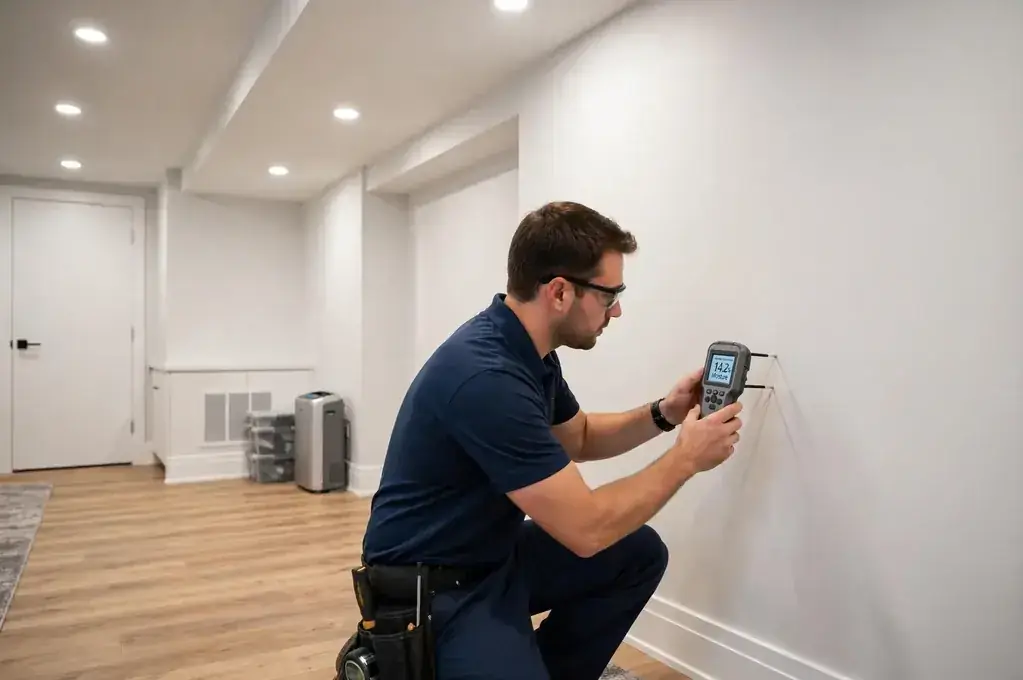
When both sides disagree about the source, detection settles it. A technician can pressure test your system to prove it holds, map the moisture gradient across the shared wall to show which side is wettest and therefore closest to the source, and use acoustic listening or thermal imaging to locate the active leak itself when access is granted.
That written, evidence based finding is often what unlocks cooperation, HOA action, or an insurance decision in Snohomish County shared wall homes. ProLine Leak Fix Pros provides precise, non invasive detection and clear documentation of the source location, so the conversation moves from opinions to a repair plan.
A detection report carries weight beyond the technical finding. It states which system was tested, how it performed, where moisture peaks, and where the active source sits, in neutral language both sides can rely on. HOAs and insurers act on documented findings far faster than on competing accounts, so that report often shortens the dispute more than any single conversation.
Conclusion: Proof First, Then a Calm Knock
A neighbor's leak feels personal, but the solution is procedural: prove it is not yours, document the damage and the pattern, then talk with facts in hand. Most cases end with a repair next door and a drying plan on your side.
If you need the source confirmed before that conversation, call ProLine Leak Fix Pros at (425) 380-0028. We will pinpoint where the water starts and document it clearly, so you can protect your home with confidence.
After the neighbor's repair, confirm your side dries out. Moisture readings should fall steadily once the source stops. If they do not, either a second source exists or wet material is sealed where air cannot reach it. A short recheck visit protects you from closing the story too early, and gives you a clean, documented end to an unwelcome episode.
Keep one habit from this experience: photograph shared walls and ceilings once in a while when everything is dry and normal. Baseline photos make any future change obvious at a glance, whether the source turns out to be your side, their side, or the building itself, and they remove all debate about when a stain appeared or how fast it grew.