In This Article
Start Outside and Read the Yard First
A house starts telling its water story before you reach the front door. Walk the lot slowly and look at how the ground meets the foundation. Soil should slope away from the house, and downspouts should carry roof water well clear of the walls. Puddles that sit against the foundation after rain, moss growing in a straight line along one wall, or one patch of grass that stays far greener than the rest can all point to water going where it should not. Check the siding low on the walls for bubbling paint, soft spots, or staining that climbs up from the ground.
Look under eaves and around hose faucets too. A hose bib that drips slowly can soak the wall behind it for months without anyone noticing. Around the Lynnwood area, long wet winters give small exterior problems plenty of time to grow, so take the outside signs seriously even when the inside looks perfect. Note anything you find with a photo and the date, because patterns matter more than single clues.
Also study the water heater and the main shutoff area, even from the yard side of the visit. Rust streaks running down the tank, a damp floor ring, or corrosion on the pipes above the heater suggest past or present leaking. Ask when the heater was installed and whether any plumbing work has been done recently. Sellers who answer plainly and can show receipts for past repairs are usually describing a fixed problem, while vague answers about a stain or a repair deserve a follow up question before you make an offer.
Inside Signs: Stains, Smells and Fresh Paint
Inside, your eyes and nose do most of the work. Look at ceilings below bathrooms and below the roof line for rings, yellow or brown stains, and paint that bubbles or flakes. A stain with a hard edge usually marks an older event, while a stain that looks soft, dark, or damp often means the leak is still active. Press gently near baseboards in bathrooms, kitchens, and laundry rooms. Wood or trim that feels soft, swollen, or crumbly has been wet for a while, even if the surface looks fine today.
Pay attention to smells. A musty odor that is stronger in one room, one closet, or one corner usually follows hidden moisture. Be alert to fresh paint that appears in only one odd place, such as a single ceiling patch, one wall in a bathroom, or the inside of an under sink cabinet. Honest sellers repaint whole rooms. A small, fresh patch in a wet area can be an attempt to cover a stain, so ask what was painted and why, and look inside cabinets and closets where cover ups are harder to finish neatly.
Floors speak too. Walk every room in socks and feel for soft, springy, or uneven spots, especially near tubs, toilets, dishwashers, and exterior doors. Hardwood that cups or darkens in one area, vinyl that bubbles, and tile that sounds hollow in a patch all suggest moisture below. In upstairs bathrooms, look at the ceiling below once more on your way out, since a slow drip sometimes shows only as a faint line where the ceiling meets the wall, easy to miss on the first pass through the room.

A Room by Room Checklist for Showings
Bring a simple list so excitement does not make you skip steps:
- Kitchen: open the sink cabinet, feel the floor around the dishwasher, and check the fridge line for damp or green corrosion
- Bathrooms: look at caulk lines, feel around the toilet base, and check the ceiling of the room below each bath
- Laundry: inspect supply hoses, the drain standpipe area, and the floor behind the washer for staining
- Water heater area: look for rust streaks, a damp pan, and corrosion on the pipes above the tank
- Basement or crawl space: look for white mineral crust on walls, standing water marks, and damp insulation
- Attic: check for dark staining on roof boards around vents, chimneys, and plumbing stacks
Run taps and flush toilets during a longer visit if the seller allows it. Then watch and listen. Slow drains, gurgling sounds, and water that takes a long time to get hot can each hint at plumbing that needs a closer look before you commit.
Ask direct questions and write down the answers. Has the home ever had a plumbing leak, a burst pipe, or water in the basement or crawl space? Were any floors, ceilings, or walls repaired after water damage? A good seller disclosure answers much of this, but your own questions confirm it in person. If answers and evidence disagree, trust the evidence and price the risk into your decision. A short professional inspection during the buying window costs far less than discovering an active leak after the moving truck leaves.
The Meter Trick and Other Simple Tests
If you get access for a second visit, the water meter offers the most honest answer in the house. Ask that no water be used for a set period, then note the meter reading, including the small leak indicator dial if it has one. Wait one to two hours with everything still off and read it again. Any movement means water is going somewhere, even if every room looks dry. A toilet that leaks silently into its bowl is a common cause, but a hidden supply line leak will show up the same way.
A cheap moisture meter from a hardware store can also help. Touch it to suspect spots near showers, under sinks, and below stained ceilings, then compare with a clearly dry wall nearby. Readings are relative, not proof, but a big difference between two nearby spots deserves questions. Take photos of the meter in place so the readings are part of your record, not just your memory.
One more simple test: run the showers and tubs for several minutes, then check the ceilings and cabinets below them. Small drain and overflow leaks only appear while water is flowing, so a dry looking bathroom can still hide a wet ceiling an hour later. If the seller cannot allow running water tests, note that limit and lean harder on the meter reading and moisture checks. Every test you cannot run is information too, and it should shape how much certainty you demand before closing.

How Professionals Confirm What You Suspect
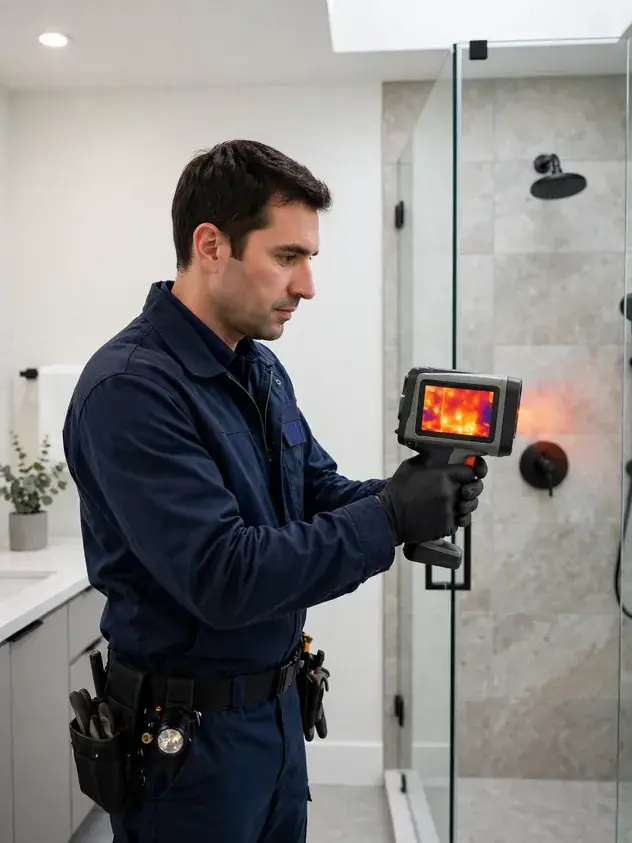
Your showing checks find suspicion. Professional leak detection turns suspicion into a location. A technician starts with the meter test to confirm water loss, then isolates zones of the plumbing to narrow the search to one part of the house. Acoustic listening equipment picks up the sound of pressurized water escaping, even through floors and walls. Thermal imaging shows temperature patterns from hidden moisture, which helps map how far the water has spread from its source.
For homes in Snohomish County, a pre purchase detection visit is often scheduled during the inspection window, so findings can inform the offer rather than surprise the new owner. ProLine Leak Fix Pros uses acoustic, thermal imaging, and tracer gas methods to pinpoint a leak before anyone opens a wall. That precision matters when you are negotiating, because a located leak with a clear repair path is a very different problem from a vague worry about damp.
Ask the technician to explain findings in plain terms and to mark the located spot clearly. A written summary with the leak location, the method used, and the moisture extent lets you negotiate with facts: a seller credit, a repair before closing, or a price adjustment all become easier to discuss. It also protects you after the purchase, because your repair crew starts at the right place instead of opening several walls. Keep the report with your closing papers for future reference.
Buy With Your Eyes Open
No older home is perfectly dry in every corner, and a small past stain with a fixed cause is not a reason to walk away. The goal is to know what you are buying: which marks are history, which are active, and which need a professional answer before you sign. Slow down, check outside and inside, test the meter if you can, and treat fresh paint in wet places as a question, not an answer.
If a showing leaves you unsure, get the leak found before closing, not after. Call ProLine Leak Fix Pros at (425) 380-0028 and let detection pinpoint the source, so your new home starts with facts instead of surprises.