In This Guide
- Why Spring Is When Winter Damage Shows Up
- Indoor Pipe Inspection Checklist
- Outdoor and Underground Checks
- Reading Your Water Meter for Hidden Leaks
- Warning Signs You Missed a Freeze Break
- When to Call a Leak Detection Specialist
- Checking Your Sump Pump and Foundation Drainage
- When Freeze Damage Needs a Professional
Spring thaw pipe leak checks are the essential follow-up to winterizing. A pipe that cracked during a January freeze may not reveal itself until March or April, when you turn outdoor water back on, irrigation season begins, or a slow wall leak finally soaks through drywall. Catching that damage in spring keeps a small repair from becoming a summer renovation.
This guide gives you a room-by-room and yard-by-yard inspection plan for the weeks after the last freeze, so nothing winter did to your plumbing goes unnoticed.
Why Spring Is When Winter Damage Shows Up
Freeze damage often hides for weeks. A hairline crack in a pipe inside a wall may weep so slowly that it takes months to stain the drywall. An outdoor hose bib that split in January only leaks when you open its interior valve in spring. Underground lines shift as frozen soil thaws, opening joints that held all winter. Spring is when water starts flowing through every part of the system again, and that is when the weak points announce themselves.
Indoor Pipe Inspection Checklist
Walk through the house with eyes, ears, and nose:
- Under every sink: look for damp cabinet floors, swollen particle board, or musty odor.
- Around the water heater: check the base and the drain pan for rust, moisture, or mineral deposits.
- Behind toilets and washing machines: feel supply lines and look at the floor and wall behind them.
- Ceilings below bathrooms: scan for yellow-brown stains, bubbling paint, or sagging drywall.
- Crawl space and basement: look for standing water, damp insulation, and drips on pipes and joists.
- Listen at night: with the house quiet and no water running, listen at walls for hissing or dripping sounds.
Outdoor and Underground Checks
Before opening interior shutoff valves to hose bibs, inspect the wall inside the house behind each faucet for dampness. Then open the valves slowly and watch the faucet and the wall. Walk the yard and look for unusually green or soggy patches, which can signal an underground water line leak that opened as the soil thawed and shifted.
Test the irrigation system zone by zone, watching for geysers, sunken heads, or zones with weak pressure, all classic signs of a cracked line or broken fitting.
Reading Your Water Meter for Hidden Leaks
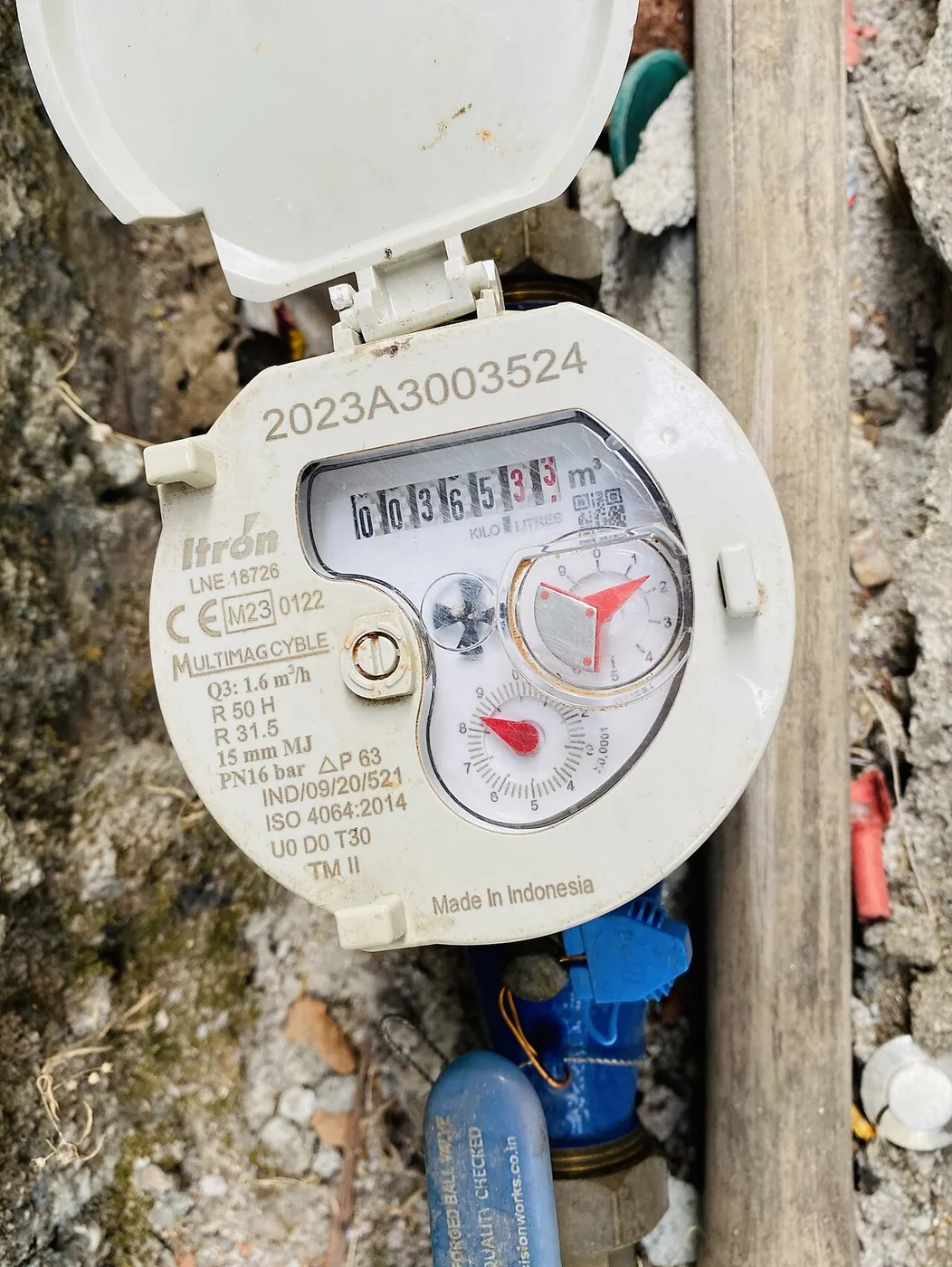
The water meter test is the simplest way to catch a leak you cannot see:
- Turn off every faucet, appliance, and irrigation zone in the house.
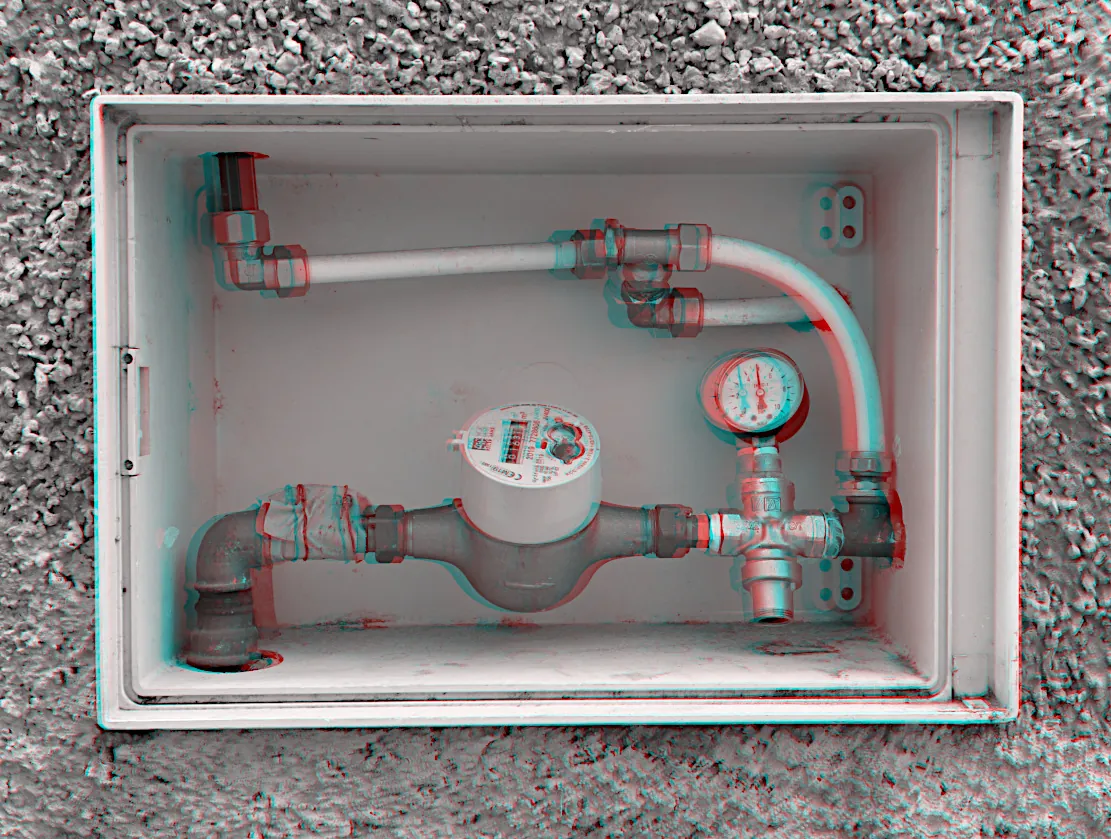
- Find your water meter, usually near the street or sidewalk, and note the reading.
- Wait two hours without using any water.
- Read the meter again. Any movement means water is going somewhere it should not.
Many meters also have a small leak-indicator dial that spins with even tiny flows. If it moves while everything is off, you have a hidden leak worth investigating.
Pro tip: take a photo of the meter reading with your phone at the start and end of the test. The timestamp proves the interval and makes the comparison easy.
Warning Signs You Missed a Freeze Break
| Sign | Likely Cause | Action |
|---|---|---|
| Water bill jumped after winter | Slow hidden leak from a freeze crack | Run the meter test, then call for detection |
| Musty smell in one room | Moisture inside a wall cavity | Inspect with a moisture meter or thermal camera |
| Low water pressure at one fixture | Partially blocked or leaking supply line | Check the line feeding that fixture |
| Soggy patch in the yard | Underground line damaged by frost heave | Mark the spot and schedule detection |
| Hose bib sprays from the handle | Split stem from trapped ice | Replace the faucet and check the interior pipe |
When to Call a Leak Detection Specialist
Call when the meter test shows movement you cannot explain, when you find stains or dampness but cannot see the source, or when pressure problems point to a break inside a wall or slab. Professional detection finds the exact location, which means the repair opens the smallest possible area. That precision saves drywall, flooring, and money.
Checking Your Sump Pump and Foundation Drainage
Spring melt saturates the soil around your foundation, so your sump pump earns its keep in March and April. Test it by pouring a bucket of water into the pit; the pump should kick on quickly and empty the pit without strange noises. Make sure the discharge line is clear of ice and debris and that it carries water well away from the foundation, not just around the corner where it seeps back. Check that gutters and downspouts survived winter intact and direct roof runoff well away from the house. Walk the foundation and look for new cracks or efflorescence, the white mineral crust that marks where water is pushing through concrete.
When Freeze Damage Needs a Professional
Some spring discoveries are beyond DIY. Call a professional when the water meter shows movement with everything off, when stains appear on ceilings far from any visible pipe, or when a wall feels damp but you cannot find the source. Acoustic listening equipment and thermal imaging can pinpoint a leak inside a wall or under a slab without tearing the house apart. Our water leak detection in Lynnwood finds the exact failure point so repairs stay small and targeted. The sooner a hidden freeze break is located, the less damage it does.
Spring thaw pipe checks take an afternoon and can save you from discovering winter's damage the hard way. Work through the indoor and outdoor lists, run the meter test, and fix what you find while it is still small. If you need help finding a hidden leak anywhere in your Lynnwood home, ProLine Leak Fix Pros is one call away at (425) 380-0028.