In This Article
- Why Baseboards Swell Before Anything Else Shows
- Read the Pattern: Where It Swells Tells You Where to Look
- The Leaks That Hide at the Base of a Wall
- Before You Replace the Trim: Three Rules
- How Professionals Trace Baseboard Moisture to Its Source
- Conclusion: Treat Swollen Trim as a Leak Report, Not a Trim Problem
Baseboards are easy to overlook, which is exactly why they make such honest witnesses. The trim at the bottom of your wall sits at the lowest point of the wall system, right where hidden water ends up. When it starts to swell, bubble under the paint, split at the joints, or quietly pull away from the wall, it is usually reporting weeks of moisture you never saw.
This guide explains why baseboards react the way they do, how to read the pattern they make, the leaks that hide at wall bases, and how professionals confirm the source so you replace trim once, after the water is gone for good.
Why Baseboards Swell Before Anything Else Shows
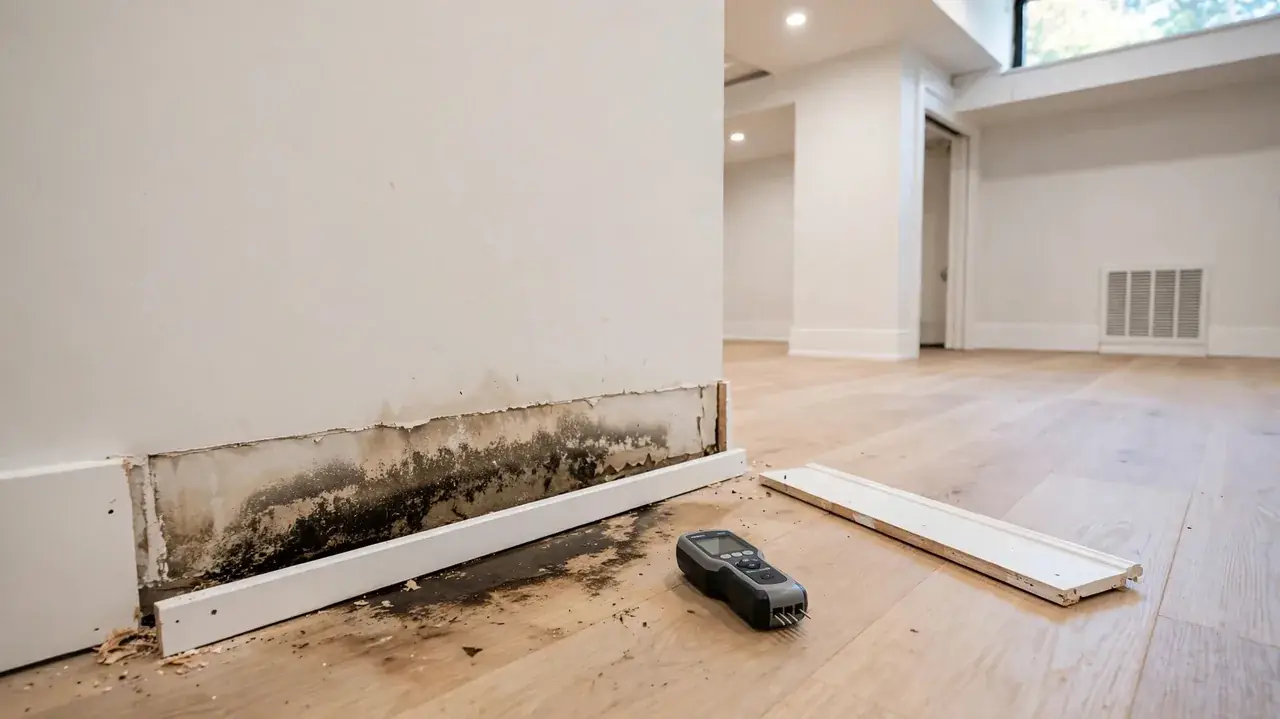
Most baseboards today are made of MDF or soft wood, and both drink water eagerly. MDF is pressed fiber, and once water reaches its unpainted back edge it swells like a sponge, growing thicker, softening, and pushing the paint film outward into bubbles and cracks. Solid wood swells too, mostly across its width, which opens miters at corners and pops nails loose. Neither material needs a flood. A slow seep that keeps the bottom of the wall damp day after day is enough, because the trim sits in contact with that damp zone full time.
Water reaches the baseboard by wicking. A leak inside the wall, under the floor, or at a nearby fixture soaks the bottom plate and the drywall edge, and capillary action pulls that moisture sideways and down into the trim. By the time the baseboard looks wrong, the materials behind it, the wall base, the flooring edge, and sometimes the subfloor, have usually been wet longer than the trim has. The baseboard is not the start of the problem. It is the visible tip of it.
Read the Pattern: Where It Swells Tells You Where to Look
Map the damage before you touch a pry bar. The shape of the swelling is a rough diagram of the water's path:

- One short section only: a local source, often a fixture or fitting on the other side of that wall
- Swelling that fades with distance: the strongest damage usually sits closest to the entry point
- Both sides of one wall: the source is inside the wall itself, commonly a pipe or drain joint
- A whole room's perimeter: suspect water under the floor, a slab issue, or repeated flooding from one corner
- Bathroom and laundry walls first: daily use fixtures and hoses are the most common feeders
Add touch to the survey. Swollen trim that feels cool or soft is wet now. Paint that powders or crumbles when pressed means the fiber underneath has been wet long enough to break down. Check the floor right against the trim as well: a darkened wood edge, lifting laminate, or a musty smell at floor level confirms the moisture is not just in the trim but in the floor system touching it.
The Leaks That Hide at the Base of a Wall
The pipes that leak at baseboard height are the quiet ones. Supply lines run through the bottom of walls to reach sinks, toilets, tubs, and washers, and a tired fitting or pinhole at that height drips straight onto the bottom plate. Drain lines from a tub or shower can weep at a joint inside the wall and release water only while the fixture drains, which is why the damage can grow for months with no visible puddle. In Lynnwood homes with plumbing in the slab, a slab leak near a wall can also send moisture up the wall base from below.
Non pipe sources join the list. A shower that leaks past a worn door seal or failed caulk wets the wall base beside the stall a little every day. A toilet that rocks on a failing wax ring can seep at the floor line behind the base. Rain intrusion at a wall's bottom edge, from siding or grade problems, wets exterior walls from outside in. Your pattern map, plus which rooms share the wall, usually separates the indoor plumbing suspects from the weather driven ones.
While you survey, remember that baseboards also report on the rooms you cannot see into: the wall cavity and the floor system share everything that happens at that height. If the trim on the hallway side of a bathroom wall swells while the bathroom side looks perfect, the water is almost certainly inside the wall, not in the bathroom finishes. If both sides swell at the same stud bay, the source sits right there. And if the trim swells only beside an exterior door, think about weather and thresholds before plumbing. Reading the trim this way, as a set of instruments installed around every room at exactly leak height, turns a cosmetic annoyance into the cheapest moisture survey in the house. Note the worst sections with tape before anyone removes anything, photograph the pattern room by room, and you have handed the detection visit a map that can save an hour of scanning and at least one unnecessary opening in the wall.
Before You Replace the Trim: Three Rules
New baseboards over a live leak are a short lived decoration. Three rules keep the repair honest:
- Find the water first. No trim goes back until the source is identified and repaired, and the wall base reads dry.
- Expect the trim to be a total loss. Swollen MDF does not shrink back to shape. Plan to replace damaged sections, not sand them.
- Dry what is behind it. The wall base, insulation, and floor edge that fed the trim need drying and a moisture check, or the smell and damage return under the new trim.
It is fine to remove a damaged section of trim to inspect and help drying, once the source hunt is underway. Take photos first, note exactly which sections were worst, and keep the pieces until the technician has seen the pattern. That pattern, strongest to weakest, is evidence, and it is much harder to read once the wall is stripped clean.

How Professionals Trace Baseboard Moisture to Its Source
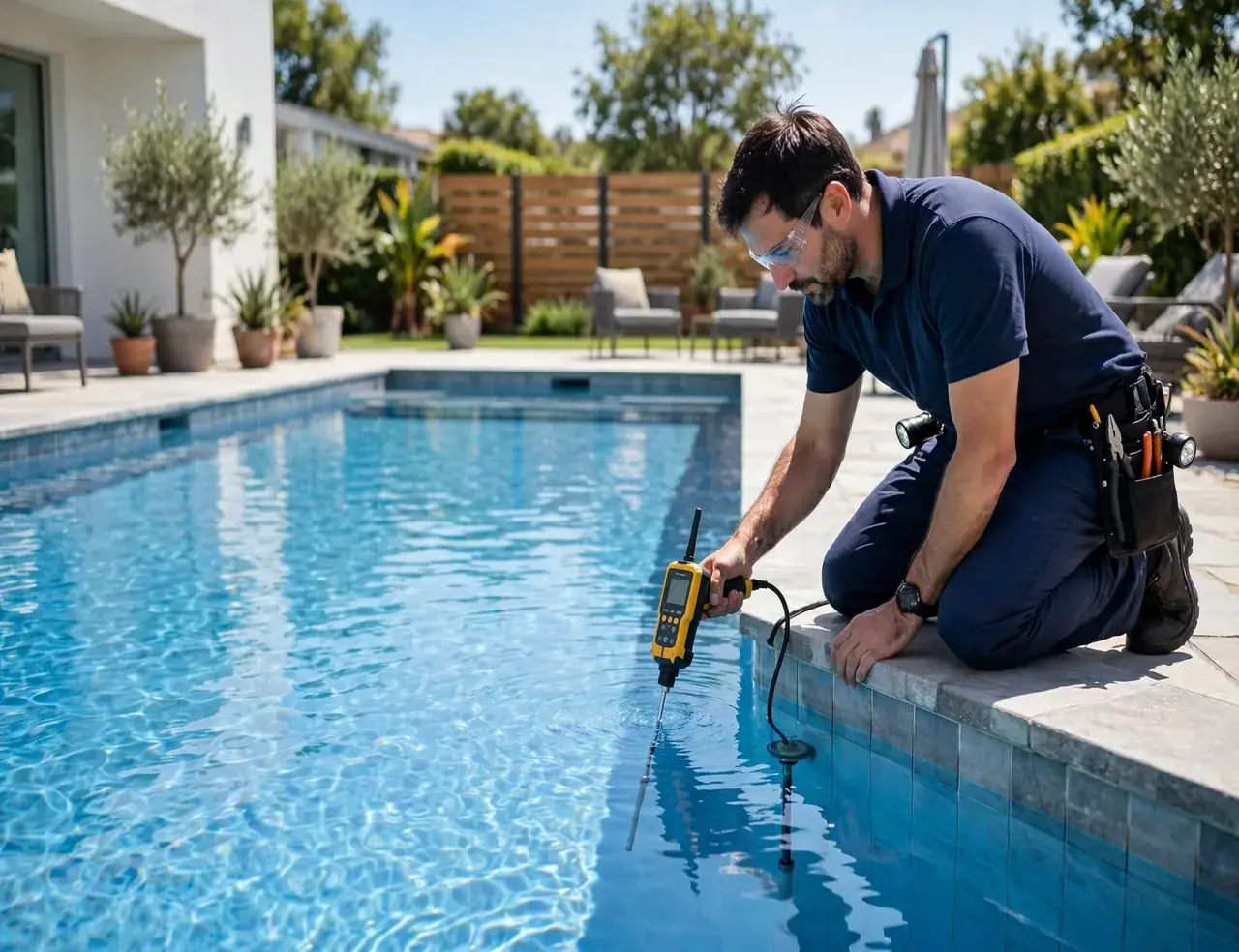
Detection follows the moisture gradient your pattern map suggests. Moisture meters read the trim, the wall above it, and the floor beside it, and the readings climb toward the source. Thermal imaging shows how far the damp zone spreads inside the wall and whether it runs from a fitting, a drain, or upward from the floor. Acoustic listening tests the supply lines in that wall, and isolation testing, closing valves section by section, can prove which line is losing water.
ProLine Leak Fix Pros uses this sequence for water leak detection across Snohomish County, confirming the exact entry point before walls are opened. That order matters: the smallest opening, in the right bay, fixes the leak and leaves the rest of the wall, and your new baseboards, alone.
Conclusion: Treat Swollen Trim as a Leak Report, Not a Trim Problem
Baseboards swell because water has been visiting the bottom of your wall for a while. Read the pattern, find which fixtures and pipes share that wall, and remember that the trim is the last thing to fix, not the first. Source, repair, drying, then new trim: in that order, the problem stays solved.
If one wall's baseboards are swelling, splitting, or pulling away in your Lynnwood home, have the moisture traced before you replace anything. ProLine Leak Fix Pros pinpoints the hidden source at wall bases, so the repair is done once and the new trim stays flat, dry, and quiet.