In This Article
It is 2 a.m. and the toilet in the hall bathroom suddenly runs for ten seconds, then stops, even though nobody has touched it. Homeowners call this phantom flushing, and while it sounds like a ghost story, the cause is simple plumbing wear. Your toilet is losing water from the tank into the bowl, slowly and silently, until the water level drops enough to trigger the fill valve for a quick top up.
That short refill cycle can repeat every few minutes, all day and all night, which makes a phantom flushing toilet one of the most common hidden water wasters in any home. This guide explains why it happens, shows you the dye test that proves it, and covers the parts that fail, so you know whether this is a quick fix or a sign of a bigger leak.
What Is Actually Happening Inside the Tank
A toilet tank holds a set amount of water, sealed at the bottom by a flexible rubber flapper or a tower seal. When you flush, that seal lifts, water rushes into the bowl, and the seal drops back into place. The fill valve then refills the tank to its marked water line and shuts off.
Phantom flushing starts when that seal no longer holds perfectly. Water seeps past it in a thin, silent stream. You cannot see the movement in the bowl, and you cannot hear the seep itself. You only hear the correction: once the tank level falls far enough, the fill valve opens and refills it. The cycle you hear is the symptom. The slow leak through the seal is the disease.
The refill you hear usually lasts only a few seconds, which is why so many people miss it during the day. At night the house is quiet, the cycle stands out, and it can repeat often enough to disturb sleep. If you want to know how bad it is, put a strip of dry toilet paper on the back inside wall of the bowl before bed. A wet strip in the morning means water has been trickling down that wall all night.
The Dye Test: Ten Minutes to Proof
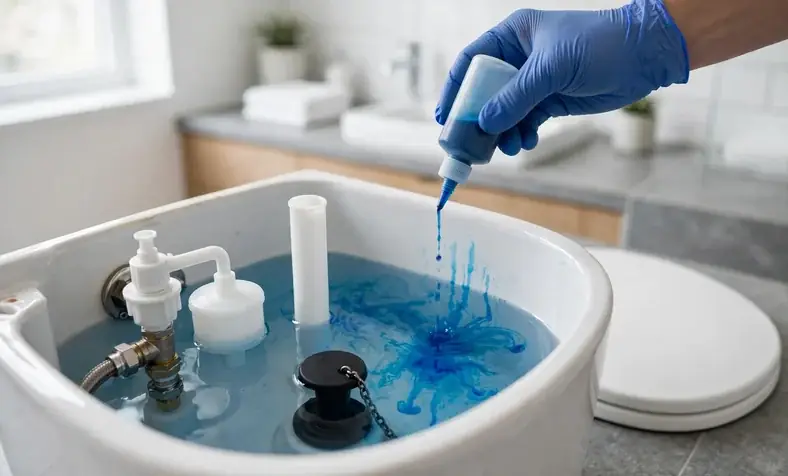
You do not need tools to prove a silent toilet leak. You need food coloring or a dark drink, and a little patience:
- Remove the tank lid and set it somewhere safe where it will not crack.
- Add several drops of food coloring to the tank water until it is clearly tinted.
- Do not flush. Leave the toilet completely alone for 15 to 20 minutes.
- Check the bowl. If colored water has appeared in the bowl without a flush, the seal is leaking.
- Repeat the test on every toilet in the house, since more than one can leak at the same time.
A clear bowl after twenty minutes means that toilet is holding its water. A tinted bowl means you found at least one source of water loss, and the fix usually starts inside that tank.
Use a strong color for the test. Pale tints can be hard to see against porcelain, especially in dim bathroom light. If you do not have food coloring, a dark powdered drink mix works just as well. And test on a calm schedule: if someone uses the toilet mid test, the result is meaningless and you will have to start again, so let the household know the bathroom is off limits for twenty minutes.
The Parts That Fail, and Why
Three parts account for nearly every phantom flush:
- The flapper or flush seal: rubber hardens, warps, and grows a rough surface over time, especially in treated city water, until it can no longer seal flat
- The flush valve seat: mineral scale and corrosion on the surface the flapper lands on create tiny channels for water to escape
- The fill valve: a worn fill valve can overfill the tank, sending water down the overflow tube in a steady, silent stream
Water level matters too. If the tank fills above the marked line, water spills over the overflow tube constantly. Check that the level sits about an inch below the top of the tube. Chain length is another quiet culprit: a chain that is too long can get caught under the flapper and hold it open a crack.
Flappers rarely fail on a schedule you can predict. In some homes they last many years; in others, treated water and constant use harden the rubber much sooner. Run a finger around the flapper edge. If it feels rough, warped, or leaves black residue on your skin, it is done, no matter how it looks. The same goes for a chain that has rusted stiff, since it can hold the flapper slightly open after every flush.
When It Is Not the Toilet: How Pros Confirm the Real Source
Sometimes the dye test comes back clean on every toilet, yet the fill sound continues or the water meter still moves with everything off. That tells you the toilet was never the problem, and the real leak hides somewhere in the pressurized system. A phantom refill sound can also come from pressure changes caused by a leak elsewhere in the house.
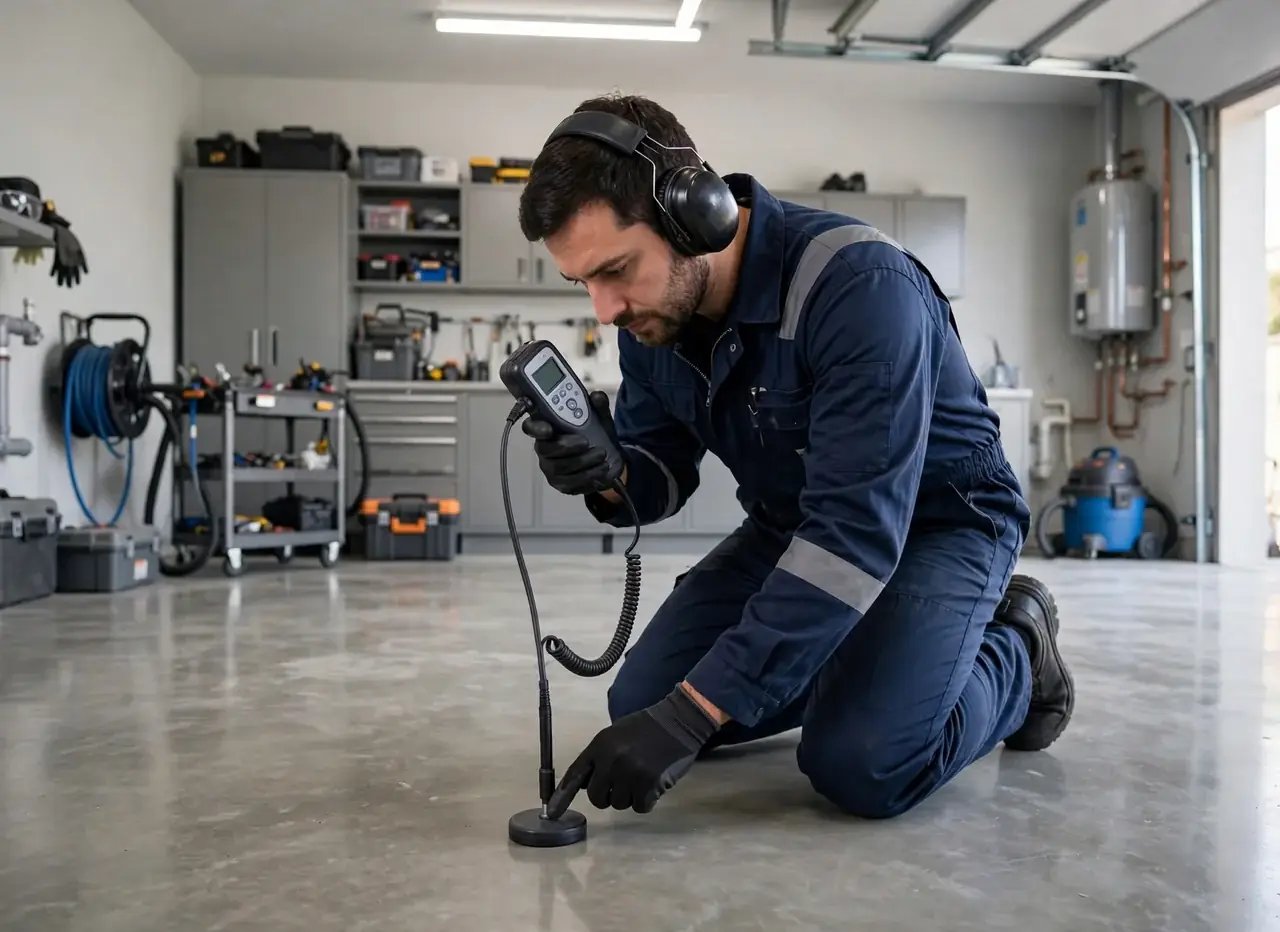
At that point, professional leak detection takes over. A technician runs a meter test to confirm ongoing loss, isolates the toilets and other branches with shutoff valves, and then uses acoustic listening gear to follow the sound of escaping water through walls and floors. Thermal imaging and moisture readings confirm the spot before anything is opened. ProLine Leak Fix Pros follows exactly this sequence in Lynnwood homes, because fixing the wrong fixture wastes time while the real leak keeps running.
There is a simple halfway check before calling anyone. Close the angle stop valve behind each toilet, one toilet per night if needed, and listen. If the phantom sound disappears on the night a particular toilet is isolated, that toilet owns the problem even if its dye test looked clean, because some seals leak only under certain tank levels. If the sound survives every toilet being closed, the call for detection is the right next step.
Why a Small Toilet Leak Deserves Fast Attention
It is tempting to live with a toilet that tops itself up a few times an hour. The toilet still works, and nothing looks wet. But that cycle runs 24 hours a day, and the wasted water adds up far faster than most people expect. It is often the single biggest reason a household water bill climbs with no change in habits.
There is also a diagnostic reason to fix it promptly. A known toilet leak muddies every other leak check in the house. Until the toilet holds water properly, you cannot trust a meter test to tell you whether a second, hidden leak exists. Fix the seal, confirm the phantom flushing has stopped, then retest the meter. If the meter still moves, you have another leak to find, and now you know it for certain.
A running toilet also stresses parts beyond itself. The fill valve cycles far more often than it was designed to, which wears it out early, and the constant cold refill can make a nearby water heater work a little harder all day. Small leak, long shadow. Fixing the seal promptly is one of those rare home repairs where the cheap, fast option is also the complete one, as long as the dye test says the toilet is truly the source.
Conclusion: No Ghost, Just a Worn Seal
Phantom flushing feels strange, but it is one of the most fixable plumbing problems in the house. The dye test proves it in minutes, and the cause is almost always a flapper, a flush valve seat, or a fill valve that has reached the end of its life. Start there, test every toilet, and watch the meter afterward.
If the dye test is clean and your meter still moves, the leak is somewhere else and it is worth finding properly. Call ProLine Leak Fix Pros at (425) 380-0028 and we will track the real source with non-invasive detection, anywhere in Lynnwood or Snohomish County.
After any fix, prove the cure the same way you proved the problem. Repeat the dye test, then check the meter with everything in the house off. A still meter and a silent night mean the ghost has moved out for good. If either test still fails, you have learned something valuable: the toilet was a symptom or a companion, and the main leak is still out there waiting to be found.