In This Article
Yesterday the shower felt strong. This morning it barely rinses the shampoo out. A sudden drop in water pressure is alarming because it arrives without warning, and it raises an uncomfortable question: is something broken, or is something leaking? The honest answer is that pressure drops follow patterns, and the pattern usually points straight at the cause.
Before you panic, note three things: whether the whole house is affected or just one area, whether the hot side, the cold side, or both feel weak, and whether the drop came with any other change, like discolored water or a new sound. With those clues in hand, work through the nine causes below in order. Several are simple. One of them, a hidden leak, deserves fast professional attention.
First, Read the Pattern of the Drop
Pressure problems speak a simple language. If every faucet in the house dropped at the same time, the cause sits at or before the point where water enters the home: the street supply, the main shutoff, the pressure regulator, or the main line itself. If only one bathroom or one floor is weak, the cause lives in that branch.
Hot side only weakness points toward the water heater and its valves, sediment, or hot lines. Cold side only weakness points toward supply and fixture issues. A drop that is worst at one single faucet is almost always local to that faucet. Write your pattern down before you touch anything. It will save you from checking the wrong half of the system, and it is exactly the first thing a technician will ask you.
Timing adds one more layer to the pattern. A drop that happens only at busy hours, morning showers or evening laundry, suggests the system cannot keep up under demand, which points at a restriction. A drop that is constant at 3 a.m. and 3 p.m. alike suggests either supply pressure or an escape. Jot down when it feels worst for a day, and the shape of the problem usually becomes obvious.
9 Causes to Check, in Order
- A partly closed main shutoff: valves get bumped during yard work, meter visits, or storage shuffles in the garage
- A failing pressure regulator: the bell shaped device near the main line can wear out and choke flow to the whole house
- City supply work: street repairs or a flushed hydrant nearby can drop pressure and stir up sediment for hours
- A clogged aerator or showerhead: sediment collects at the screen and strangles one fixture at a time
- A water heater valve or sediment problem: hot side pressure falls when the heater inlet is partly closed or the tank is full of scale
- A stuck or failing fixture valve: angle stops under sinks corrode and stop opening fully
- Frozen or partly frozen pipe: in a cold snap, ice narrows the line before it blocks it fully
- A burst or leaking pipe: water escaping through a break is pressure your faucets never see
- A leak in the buried service line: the pipe from the meter to the house fails quietly and steals pressure house wide
Notice how many of the nine causes are restrictions rather than failures. Valves half closed, screens clogged, regulators choking flow: the plumbing equivalent of a kinked hose. That is good news, because restrictions are usually cheap to clear once you find the right one. The two causes that are not restrictions, a leaking pipe and a failing service line, are the ones the meter test is designed to catch.
Simple Checks You Can Do in Twenty Minutes
Start outside. Ask a neighbor whether their pressure dropped too. If yes, the problem is likely the city supply, and it often resolves on its own. Next, check your main shutoff and any valve that may have been moved recently, and make sure each is fully open. Then unscrew one faucet aerator and rinse out the grit. If that faucet improves, sediment is part of your story.
Finally, run the meter test. With no water in use, watch your water meter for movement. A meter that turns while the house is quiet means water is escaping, and that changes the problem from annoying to urgent. A still meter plus weak pressure suggests restriction, not loss: something is blocking flow rather than stealing it.
While you check valves, look at them, do not just turn them. A valve stem with green corrosion or a damp patch beneath it is a valve that is starting to leak as well as restrict. Take a quick look under sinks and around the water heater during your rounds. Pressure investigations have a way of finding small drips that had nothing to do with the original complaint, and catching those early is a bonus, not a distraction.
How Professionals Separate a Blockage From a Leak
Restriction and loss can feel identical at the tap, but they need different fixes, and professionals separate them with pressure testing. A technician measures static pressure with everything off, then dynamic pressure with fixtures running. Healthy static pressure that collapses under flow points to a restriction somewhere in the system. Falling pressure at the meter with everything closed points to escaping water.
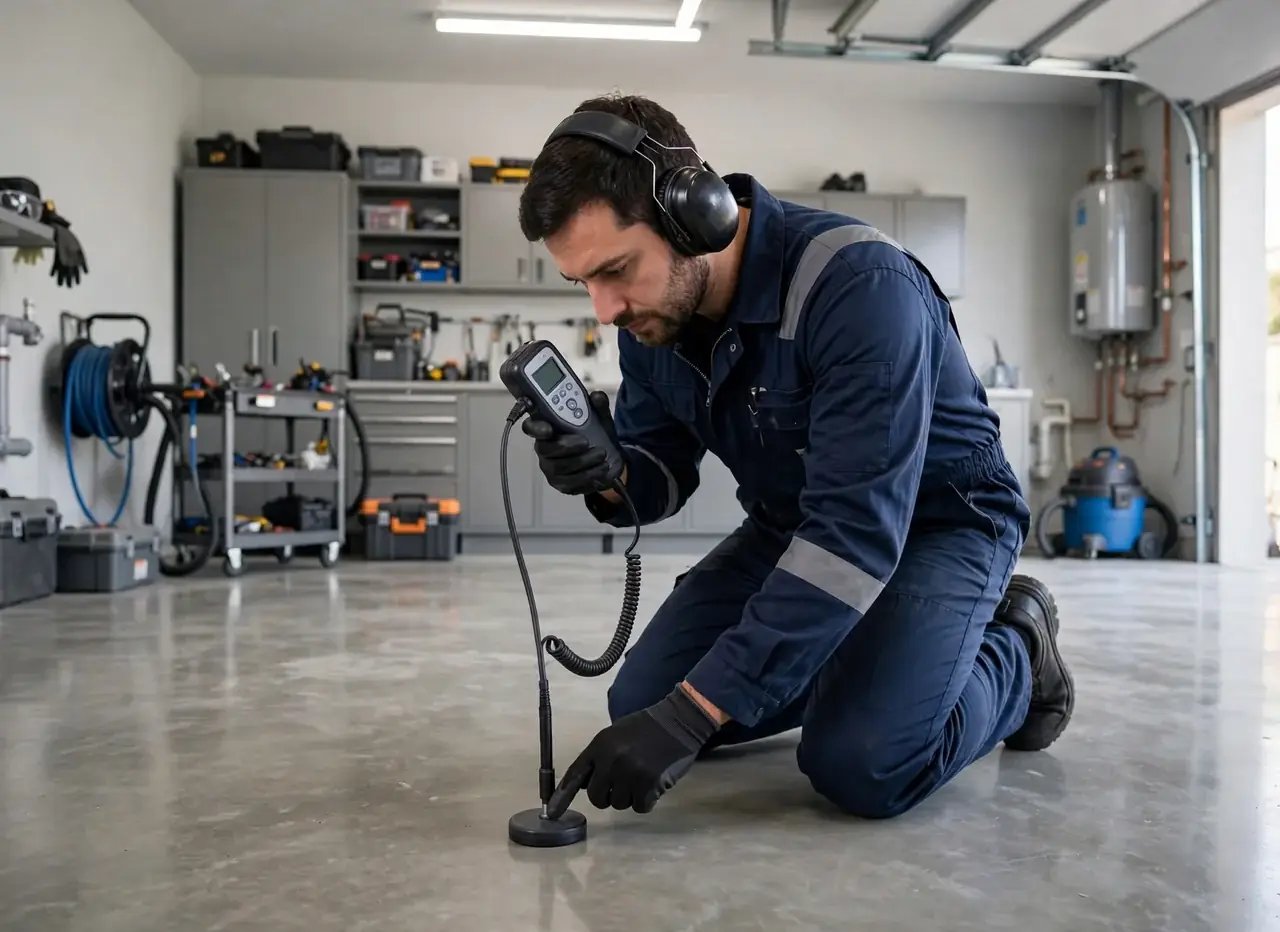
If the tests say leak, acoustic listening equipment follows the sound of the escaping water, and thermal imaging confirms the wet path behind walls or under floors. For a buried service line, correlation sensors can measure the leak position along the pipe. ProLine Leak Fix Pros uses this test first, dig second approach throughout Lynnwood and Snohomish County, so a pressure problem gets a proven answer instead of a guessed one.
Homeowners sometimes ask why a technician will not just start replacing the regulator, since it is a common culprit. The answer is that parts cost money and guessing wastes it. Ten minutes of readings can prove whether the regulator is choking the flow, whether the street supply is weak that day, or whether water is leaving the system entirely. A good diagnosis names the failed part before anyone buys it.

Red Flags That Mean Stop Checking and Call
Some pressure drops should skip the checklist entirely. Call promptly if the drop arrives with the sound of running water when everything is off, a wet spot appearing on a floor or ceiling, a warm patch on the floor, or a meter that spins fast with the house quiet. Those are leak signatures, and every hour of delay adds water where it does not belong.
Also act fast if pressure fell right after a hard freeze or a loud bang in the pipes. Both can mean a pipe has split. In that case, close the main shutoff valve until the situation is checked. Knowing where that valve is, and confirming it works before an emergency, is one of the most useful pieces of homework a homeowner can do.
One more red flag deserves a place on the list: pressure that drops in rhythm, pulsing stronger and weaker at a running tap. Pulsing can mean a failing regulator or a pump problem, and pressure swings stress every seal and hose in the house. It is not an emergency tonight, but it should not ride for months either. Steady, boring pressure is what plumbing likes.
Conclusion: The Pattern Names the Cause
A sudden pressure drop feels mysterious, but it obeys rules. Whole house or one zone, hot or cold, blockage or loss: each answer narrows the search until the cause has nowhere left to hide. Work the simple checks first, especially the meter test, because it cleanly separates a harmless restriction from an active leak.
If your meter moves with the house quiet, or the drop came with sounds or wet spots, call ProLine Leak Fix Pros at (425) 380-0028. We will test the system, pinpoint any hidden leak without demolition, and tell you plainly what is going on.
If your checks end with a clean meter and a clogged aerator, enjoy the easy win and clean the rest of the aerators while you are at it, since they were all drinking the same sediment. If the checks end with unanswered questions, that is fine too. You have gathered exactly the observations a technician needs: the pattern, the timing, and the meter result. That homework shortens the visit and sharpens the answer.