In This Article
Behind every toilet, usually hidden by the curve of the bowl and a cleaning brush, sits a short, humble hose: the toilet supply line. It carries full household water pressure, day and night, year after year. Nobody thinks about it, and that is exactly how it likes to fail. Supply lines rarely announce a problem loudly. They age quietly, and then one ordinary day the connector lets go and the bathroom floods at full pressure until someone closes the valve.
The good news is that a tired supply line almost always shows warning signs first, if you know where to look. Age, bulges, corrosion, and stiff, cracking material all tell the story weeks or months before a failure. This guide shows you how to inspect the line behind your toilet in about two minutes, what each warning sign means, and when a small weep means the problem is bigger than the hose.
Why This Small Hose Causes Outsized Floods
Most plumbing leaks are limited by how the fixture is used. A drain leaks only while water runs. A faucet drips a little at a time. The toilet supply line is different: it is one of the few parts of your plumbing that holds full street pressure continuously, with nothing downstream to slow a failure down. When a connector nut cracks or a hose bursts, water flows at the full rate the pipe can deliver.
The location makes it worse. The line hides behind the toilet, where a slow weep can soak the wall base, the flooring, and the subfloor for weeks without being seen. Bathrooms on upper floors send that water into ceilings below. Many of the worst home water damage stories in Lynnwood and across Snohomish County start with this one inexpensive part, which is why inspectors and insurers pay it so much attention despite its size.
Consider also how rarely the area gets a second look. The supply line sits behind a porcelain curve, often in the least visited corner of the least inspected room fixtures. Guests never see it, cleaning routines work around it, and in many homes a storage bin or spare roll holder migrates in front of it. Water damage professionals will tell you that the leaks that hurt homes worst are rarely the dramatic ones; they are the quiet ones in exactly these blind spots, running for weeks against a wall plate and a subfloor that soak it all up without complaint. That is why this guide insists on a scheduled look rather than a hopeful one. You cannot rely on noticing a problem in a place you never actually see.
The Warning Signs of a Tired Supply Line
Pull out your phone light and check for these signs:
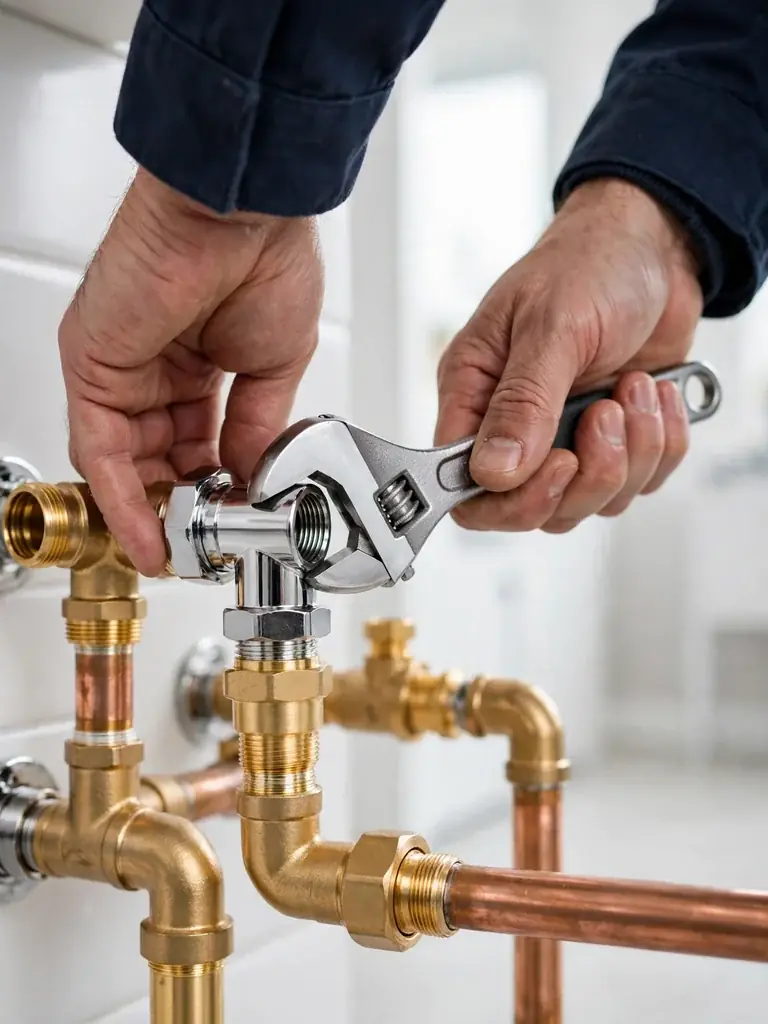
- Age you cannot account for. If the line looks original to an old remodel, or you simply do not know when it was fitted, treat age itself as a warning.
- Bulges or blisters. Any swelling along a flexible hose means the inner tube is failing and the outer braid is holding pressure it was not meant to hold alone.
- Corrosion and green or white crust. Buildup at the nuts or along metal braiding shows water has been weeping at the connection, even if it feels dry today.
- Rust on the connector nuts. Steel nuts that rust can crack suddenly, a known weak point on older plastic and metal connector designs.
- Stiffness or cracking. Older plastic lines that feel rigid, or show fine cracks when gently flexed, have lost the flexibility they need to stay sealed.
- Moisture, stains or a musty smell. A damp wall base, stained flooring behind the bowl, or odor at floor level means a slow weep is already underway.
- A valve that will not turn. The shutoff valve beside the line matters too. If it is seized, you cannot stop a failure quickly, which doubles the risk.
Any one of these signs earns the line a closer look. Two or more together mean it is living on borrowed time.
Know Your Line: Plastic, Braided Steel and Rigid Copper
Not all supply lines age the same way. Older solid plastic lines and lines with plastic connector nuts are the most failure prone as they age, because the plastic becomes brittle and the nut can crack without warning. Flexible braided stainless steel lines are the modern standard and far more forgiving, but their inner rubber tube still ages, and cheap versions can corrode at the crimps where the braid meets the nut.
Rigid copper or chrome supply tubes, common in older homes, last a long time but depend entirely on their compression seals and the condition of the fill valve shank they connect to. They can also be damaged by being bent during toilet work and then bent back. Whatever type you have, the inspection is the same: look at the full length, both nuts, and the wall valve as one system, because failures happen at connections far more often than in the middle of a line.
The Two Minute Inspection, Step by Step
- Clear the view. Move anything stored beside or behind the toilet so you can see the full line and the wall valve.
- Dry tissue test. Wrap a dry tissue around each connection, top and bottom, and around the valve stem. Wait a minute. Any damp spot on the tissue marks an active weep.
- Look with light. Shine your phone light along the hose. Look for bulges, frayed braiding, rust, green crust, and fine cracks.
- Feel gently. Run your fingers along the line. It should feel smooth and flexible, not stiff, sticky, or swollen in one section.
- Test the valve. Turn the shutoff valve a quarter turn closed and back open. It should move without a fight and without weeping at the stem.
- Check the floor and wall. Look for staining, bubbled paint at the baseboard, or soft flooring behind the bowl.
If the tissue stays dry, the line looks clean and flexible, and the valve turns freely, your supply line passes. Set a reminder to repeat the check twice a year, ideally when you check your other toilets too.

How Professionals Check When a Weep Is Already There
When a homeowner finds moisture behind the toilet, the question becomes whether the line is the whole story or just the visible part. Professionals dry the area, then use a moisture meter on the wall and floor to see how far water has traveled and how long it has likely been there. A pressure hold test on the supply side confirms whether the system keeps pressure with the toilet valve closed, separating a line weep from a leak elsewhere in the branch.
ProLine Leak Fix Pros also checks the fill valve connection and the tank bolts during the same visit, because water at the floor behind a toilet can come from above and run down the line, making the hose look guilty when it is only wet. Tools like acoustic leak detection come into play when the meter suggests water is moving inside the wall as well. Confirming the true source first means the small part gets replaced once, and any hidden damage gets found in the same visit.
Conclusion: Two Minutes Twice a Year Beats One Bad Day
The toilet supply line earns its quiet reputation honestly. It works unseen for years, then fails at full pressure with little drama beforehand, unless you look. Age you cannot account for, bulges, corrosion, stiffness, moisture, and a seized valve are its way of asking for attention while the ask is still small.
Run the two minute check on every toilet in your home, and if any line shows its age, call ProLine Leak Fix Pros at (425) 380-0028. We inspect and confirm toilet supply problems across Lynnwood and Snohomish County, day or night, before a quiet hose becomes a loud flood.