In This Article
The Seal Below: Small Ring, Big Job
A toilet connects to the drain through a floor flange, a ring set into the floor at the top of the drain pipe. Between the toilet base and that flange sits a wax ring. When the toilet is set, its weight squashes the wax into every gap, creating a watertight and gas tight seal. Two bolts through the flange hold the toilet firmly down so the wax never has to flex.
Wax seals work beautifully as long as nothing moves. They do not spring back. If the toilet rocks, the wax gets compressed on one side and pulled on the other, over and over, until a channel opens through it. Through that channel go both things the seal exists to stop: water with every flush, and sewer gas in between flushes. A wobble is therefore not a comfort issue. It is a seal failing in slow motion, and the fix gets bigger the longer the motion continues.
Why Toilets Start to Rock in the First Place
Rocking always has a mechanical cause. The usual suspects are:
- A failing wax ring: an old ring hardens or was compressed unevenly at installation, and the base starts moving years later
- Loose flange bolts: bolts can back off slowly, and once one side lifts, the rocking accelerates the loosening
- A broken or corroded flange: the ring the bolts grip can crack or rust through, leaving nothing solid to hold the toilet down
- An uneven floor: tile work, a replaced floor, or a floor that has already sagged leaves the base resting on high spots instead of a flat surface
- A flange set at the wrong height: after new flooring is added, a flange sitting too low or too high prevents a proper, stable seal
- Early subfloor damage: in the worst loop of all, a small leak softens the floor, the soft floor lets the toilet rock, and the rocking makes the leak bigger
That last loop explains why a wobble should never be answered with caulk alone. Sealing around the base can trap escaping water inside the floor and hide the very signs that would have warned you.
Checks That Tell You Whether the Seal Has Failed
You can assess the situation in ten minutes:
- The sit test. Sit down and shift your weight side to side. Any movement at all means the base is not secure. Note whether the movement is front to back or side to side.
- The smell test. Get your nose near the base. Sewer odor at floor level, in a bathroom that otherwise smells fine, suggests gas escaping through the seal.
- The stain check. Look for water staining, dark grout, or lifting flooring around the base, and check the ceiling of the room below for spots.
- The bolt check. Pop the bolt caps and look at the flange bolts. Heavy corrosion or a bolt that spins freely means the flange itself may be damaged.
- The floor check. Press the flooring around the base with your foot. Softness, bounce, or a spongy feel means water has already reached the subfloor.
A toilet that rocks but shows no smell, stains, or softness may simply need to be reset on a sound flange with a fresh seal. One that rocks with any of those signs is already leaking, and the question becomes how far the water has gone.
The Damage Happening Quietly Below the Floor
A failed seal rarely floods a bathroom. It leaks politely, a small amount with each flush, straight into the layers below: subfloor plywood, joists, and the ceiling of the room underneath. Plywood absorbs it, swells, and softens. Over months the area around the flange loses its strength, which is exactly the area the toilet bolts and flange depend on.
This is why late stage cases feel springy around the base and why simply resetting the toilet stops working: there is no sound wood left to bolt to. In bathrooms over living spaces, the first visible evidence is often a ceiling stain below that homeowners blame on the tub or shower. The toilet, rocking quietly the whole time, was the source. Catching the wobble early keeps the repair at the level of a seal and a flange, not a floor rebuild.
How Professionals Confirm a Leak at the Toilet Base
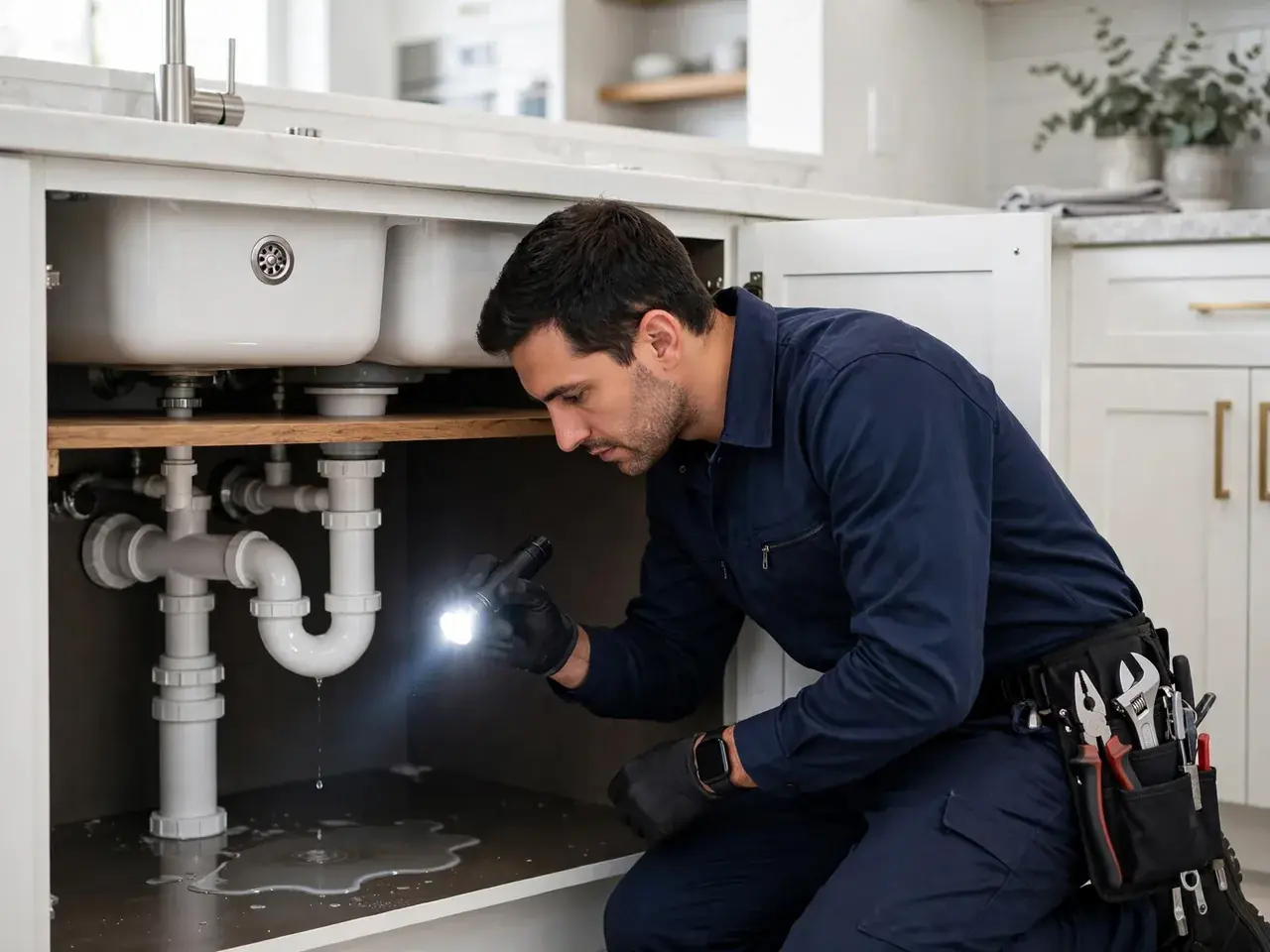
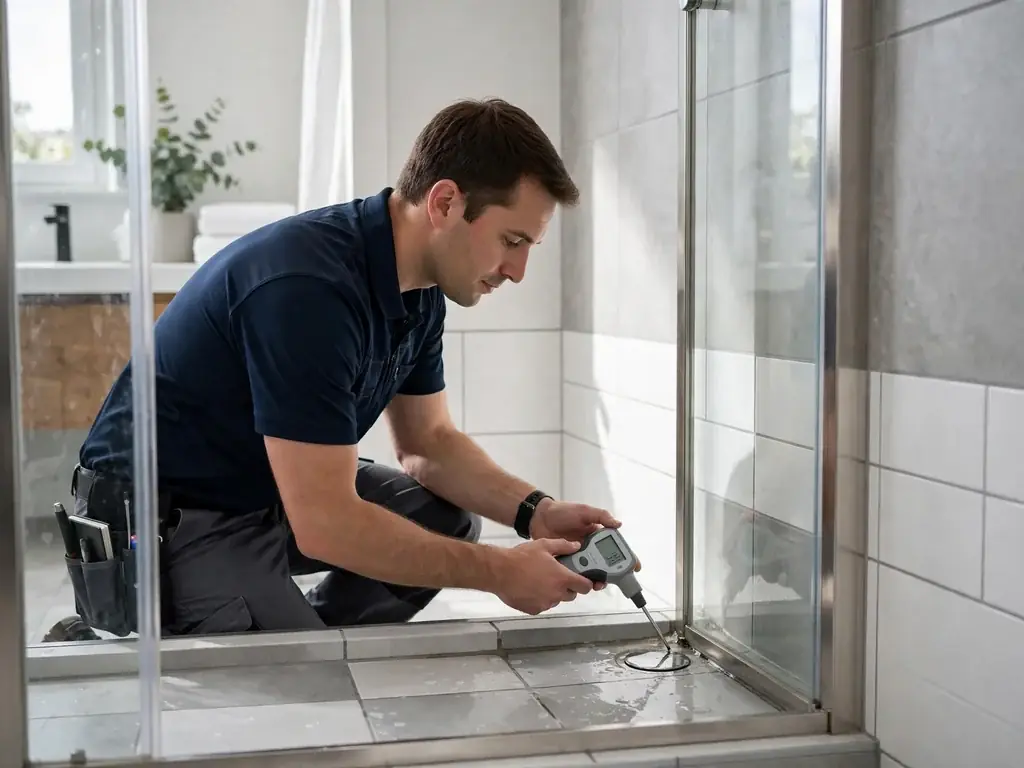
Confirmation combines the simple and the technical. A technician will check the base and flange condition, then measure the floor around the toilet with a moisture meter to map how far water has spread into the subfloor. Readings are compared with dry areas of the same floor, so the wet zone stands out clearly and its size is known before anything is lifted.
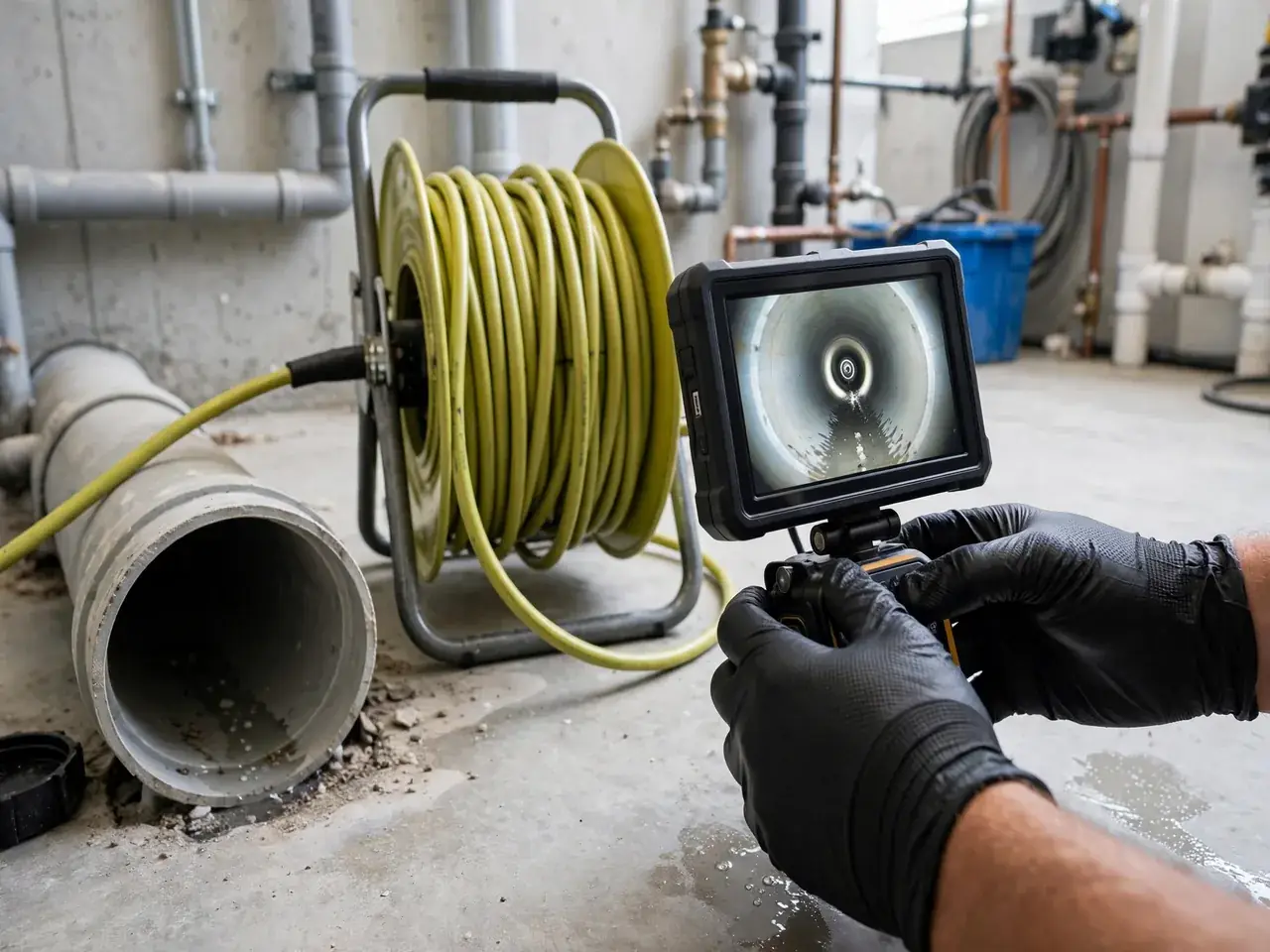
Where the drain itself is in doubt, dye testing and hydrostatic testing can prove whether water escapes at the flange or further down the line, and thermal imaging can show the damp pattern below the surface. ProLine Leak Fix Pros uses these checks in Lynnwood and across Snohomish County before recommending a reset, a flange repair, or floor work. The goal is a toilet that sits dead still on a dry, sound floor, with a seal that never has to move again.
A short word about shims and quick fixes you may see suggested: plastic shims can steady a toilet on an uneven floor, and they are a legitimate part of a proper reset when the flange and seal are renewed at the same time. What shims cannot do is restore a crushed wax ring or silence a leak that has already started. Steadying the toilet without replacing the seal is like tightening a lid on a jar that is already leaking from a crack. The rocking stops, which feels like success, while water keeps escaping below with every flush. If a toilet has rocked for a while, assume the seal has been worked and plan on lifting the toilet, inspecting the flange and floor, and setting it back on a fresh seal. That sequence, done once, is what actually ends both the wobble and the hidden leak it was creating.
Conclusion: A Rocking Toilet Is a Seal Asking for Help
A toilet should feel like part of the floor. If yours rocks, the wax seal below it is being worked apart with every use, and water has a growing path into the subfloor. Run the checks, treat odor, stains, or softness near the base as proof the seal has already failed, and get the base inspected before the floor joins the problem. Fixed early, this is one of the smallest repairs in plumbing. Fixed late, it is a floor project.