In This Article
Hardwood is a patient material, but it keeps honest records. When the edges of your boards rise higher than their centers, when whole sections tent upward, or when boards that sat flat for years suddenly feel wavy underfoot, the floor is reporting a change in moisture, usually from below. Sanding the record flat without reading it first is how homeowners end up refinishing the same floor twice.
This guide explains cupping and buckling in plain terms, how to read the pattern your floor is drawing, the water sources that hide beneath wood floors, and how professionals confirm the moisture source before anyone touches a sander.
Cupping, Crowning, and Buckling: What Each Shape Means
Wood absorbs moisture unevenly, and the shape it takes tells you where the water is. Cupping is the most common report: each board's edges lift while its center stays lower, like a shallow trough. That shape means the bottom of the board is wetter than the top, so the bottom expands more and pushes the edges up. Crowning is the reverse, a raised center, and it often appears when a cupped floor was sanded flat and then dried, or when moisture comes from above. Buckling is the extreme: boards or whole sections pull loose from the subfloor and lift dramatically, which usually means a lot of water arrived at once or over a long hidden period.
Timing adds evidence. A floor that cups slowly over a season is sipping moisture from a steady, modest source. A floor that buckles in days has met a burst line, a failed appliance hose, or a major spill that went under the boards. In Lynnwood's damp winters, mild seasonal cupping can come and go with humidity alone, but cupping that is local, persistent, or getting worse in one area is a leak signature, not a weather report.
Read the Map Your Floor Is Drawing
The layout of the damage points at the plumbing. Survey the floor like a map:
- Cupping that peaks along one wall: the source is often in or behind that wall, or under the floor right at its base
- A cupped patch in the middle of a room: suspect a line running under the floor or a slab leak below that spot
- Damage that tracks from a kitchen or laundry: appliance lines, dishwasher and refrigerator connections, and sink supplies lead the suspect list
- Cupping near a bathroom doorway: tub, shower, and toilet leaks commonly send water under the hall floor
- Dark staining between boards: water has been present long enough to react with the wood, a sign of an older, slower source
Feel helps too. Cupped areas over a hot water slab leak can feel faintly warm. Sections fed by a cold line or drain often feel cool and may smell musty when you kneel. Note where the shape is strongest and where it fades. Moisture gradients in wood point uphill toward the source, and a technician will start exactly where your map says the damage peaks.
The Water Sources That Hide Beneath Wood Floors
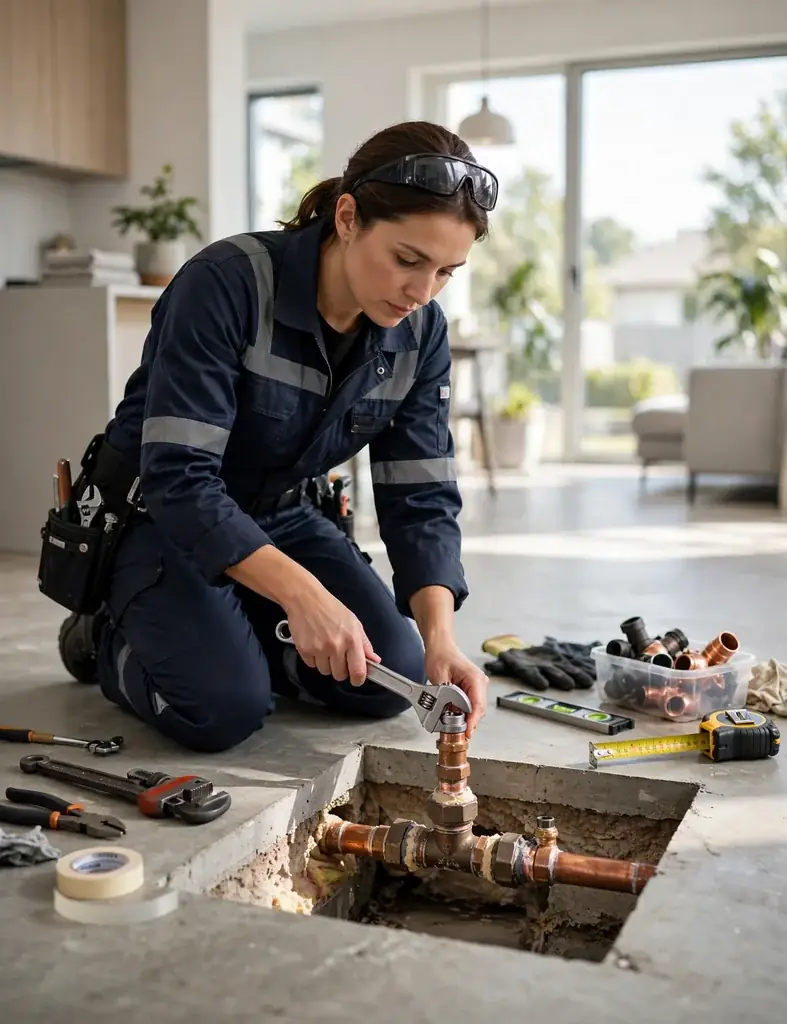
Under a wood floor there is a busy world: supply lines, drain lines, heating pipes in some homes, and the slab or crawl space below the subfloor. A slab leak is a classic hidden feeder in this region: a pinhole in a line under the concrete wets the slab, and the moisture migrates up through the subfloor into the boards for months before the cupping shows. A drain leak under a bathroom does the same on a schedule, releasing water with every shower or flush cycle.
Above floor sources reach the same place by traveling. A dishwasher that leaks only during its drain cycle, a refrigerator line with a slow drip, or a sink supply that mists under pressure all send water under cabinets and out beneath the flooring, where it spreads invisibly. The boards above may cup several feet from the appliance that is responsible. That distance is why pattern reading and moisture measurement beat guessing: the floor shows you where the water ended up, not where it started.
Engineered and laminate floors tell the same story in a different accent, and they are worth reading too. Engineered boards can cup like solid wood when moisture reaches them from below. Laminate, whose core is pressed fiber, swells at the seams instead, raising little ridges along the joints and softening underfoot when the core has been wet for a while. In both cases the message is identical: moisture is arriving from somewhere it should not be, and the surface change is the last step of a process that started below. Whatever your floor type, photograph the affected area from a low angle with light raking across it, since shape changes that are hard to see from above show clearly in raking light. Date the photos. A floor whose shape is stable across a season of photos is a very different problem from one whose waves are visibly marching across the room month by month.
Before You Sand or Refinish: The Right Order
Refinishing a floor that is still wet below is money spent on a shape that will change again. The safe order is strict:
- Find the source. Identify and repair the leak or moisture entry feeding the floor.
- Dry the system. Let the boards, subfloor, and slab or crawl space dry fully, verified with moisture readings, not by feel.
- Let the wood settle. Mildly cupped boards often flatten on their own once moisture levels equalize top to bottom.
- Then decide on sanding. Only sand a floor that reads dry and stable, or the crowning problem replaces the cupping one.
Document the floor while you wait: photos from a low angle show cupping clearly, and dated notes on which rooms are affected help both the detection visit and any flooring contractor later. Keep furniture weight off buckled sections, since lifted boards can crack or split their fasteners when pressed back down by force.
How Professionals Confirm the Moisture Below the Boards
Confirmation starts without lifting a single board. A moisture meter reads the boards themselves, and pin probes can check the subfloor through gaps or from below where there is access. Thermal imaging scans the floor for the cool signature of evaporation or the warm trail of a hot water line leaking under the slab, turning your cupping map into a precise target. Acoustic listening along the floor can pick up the sound of a pressurized leak under concrete.
ProLine Leak Fix Pros combines these tools on slab leak detection and floor moisture calls across Snohomish County. The goal is a confirmed source and a measured moisture map, so drying and any floor work that follows are based on readings, not hope.
One last reading skill: compare the suspect area with a healthy room on the same floor. Same wood, same age, different shape means a local moisture story, every time.
Conclusion: The Floor Is Reporting, Not Failing
Cupping and buckling are not the floor's fault. They are the floor's way of showing you the moisture it has been sitting in. Read the pattern, respect the order of source, drying, settling, and only then refinishing, and a mildly cupped floor often recovers without drama. Skip the first steps and the same shapes will return in the new finish.
If your wood floors are changing shape in one area of your Lynnwood home, have the moisture below them measured and traced. ProLine Leak Fix Pros finds the hidden source under floors and slabs, so your repair starts at the water, not at the sander.