In This Article
A damp spot on the ceiling, a musty smell in the hallway, a water bill that keeps climbing. Every one of these problems points to the same frustrating question: where exactly is the leak? Thermal imaging leak detection answers that question without a single hole in your drywall. An infrared camera reads the tiny temperature differences on your walls, floors, and ceilings, and turns them into a color picture that reveals what is hiding behind the surface.
At ProLine Leak Fix Pros, we use thermal cameras as one of our main tools for finding hidden leaks in Lynnwood homes. In this guide, we will explain how the technology works, walk you through the professional process step by step, and be honest about what the camera can and cannot do. If you suspect a hidden leak in your home, this guide will help you understand what a specialist does when they point a thermal camera at your walls.
What Is Thermal Imaging Leak Detection?
Thermal imaging leak detection is a non-invasive inspection method that uses an infrared camera to find signs of hidden water. The camera does not see water itself. Instead, it detects infrared radiation, which is the heat energy that every surface gives off. The camera converts that heat energy into a picture where different colors stand for different surface temperatures.
Why does temperature matter for leaks? Because water changes the temperature of building materials. A pipe joint that is dripping inside a wall will cool the drywall around it as the water evaporates. A hot water line with a pinhole leak will warm the area around it. These changes are usually only a few degrees, far too small for your hand to feel, but a thermal camera picks them up easily.
This makes thermal imaging leak detection one of the fastest ways to scan a large area. Instead of poking holes along a wall hoping to find wet framing, a technician can sweep a whole room in minutes and see every warm and cool anomaly on the screen. That speed is why it has become a standard tool for professional thermal imaging leak detection work.
Why Do Water Leaks Show Up on a Thermal Camera?
Water leaves a thermal fingerprint for two main reasons. Understanding them helps you read a thermal image like a pro.
Evaporative Cooling from Cold Water Leaks
When water from a cold water line, a drain pipe, or a roof leak soaks into drywall, wood, or insulation, it starts to evaporate. Evaporation takes heat away from the material, so the wet spot becomes cooler than the dry material around it. On a thermal image, this cooler area often appears as a blue or purple patch against a warmer background. This is the most common way leaks reveal themselves, and it works on cold water supply lines, drain lines, and rainwater intrusion.
Heat from Warm or Hot Water Leaks
A leak from a hot water line works the opposite way. Hot water leaking inside a wall or under a slab warms the surrounding material, creating a warm spot that shows up in red, orange, or yellow on the camera. This makes hot water slab leaks and water heater line leaks some of the easiest problems to spot with thermal imaging, since the temperature difference is often strong and clear.
Water changes the temperature of everything it touches. A thermal camera turns those invisible temperature changes into a picture, so a trained technician can literally see where moisture is hiding inside your walls and floors.
How Professionals Use Thermal Imaging, Step by Step
A professional scan is more than pointing a camera around a room. Here is the process our team follows:
- Prepare the area. We clear furniture away from the walls being scanned and ask the homeowner to avoid running the heating or cooling right before the visit, since HVAC airflow can mask the small temperature differences we are looking for.
- Scan walls, floors, and ceilings. The technician sweeps the camera slowly across every suspect surface, watching for irregular warm or cool patterns that do not match the normal thermal look of the building materials.
- Mark the anomalies. Anything unusual gets marked on the wall or floor with painter's tape, so the suspicious spots can be checked again from different angles and compared with the rest of the room.
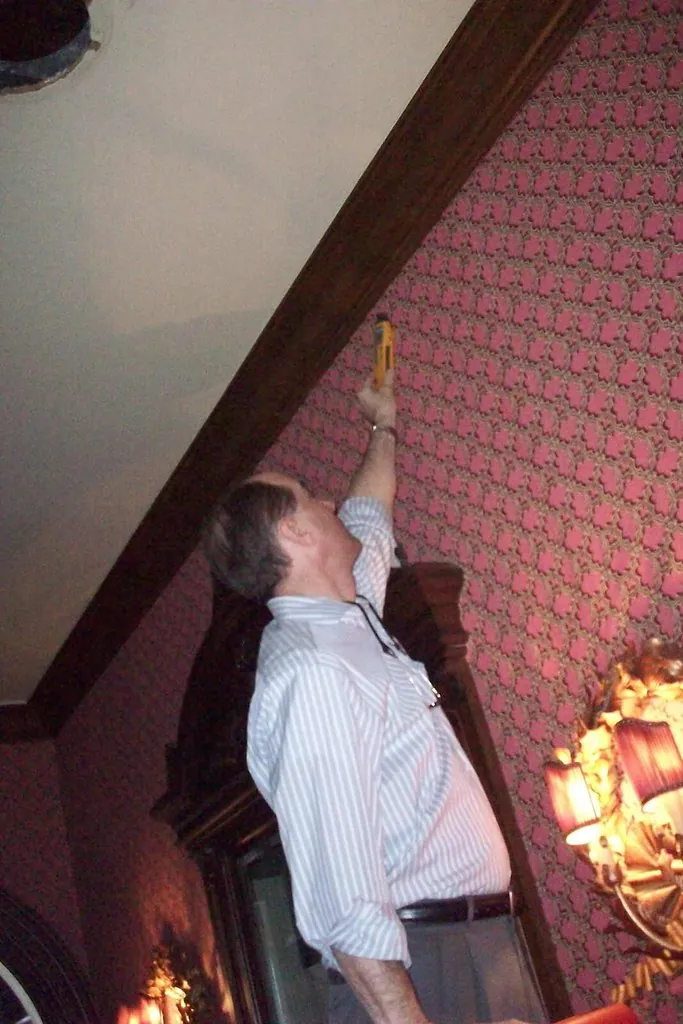
- Verify with a moisture meter. This is the critical step. A pin or pinless moisture meter confirms whether the anomaly is actually wet. Without this verification, a cold patch could just be missing insulation or a draft, not a leak.
- Pinpoint and report. Once moisture is confirmed, we map the exact boundaries of the wet area and explain what we found, so the repair can target one small spot instead of a whole wall.
The moisture meter step is what separates a real inspection from a camera demo. Thermal imaging is a screening tool: it tells us where to look closer. The meter tells us what is actually there. This is the same careful approach behind our guide on finding a leak behind a wall without tearing it down.
When Does Thermal Imaging Work Best?
The camera needs a temperature difference to work with, so conditions matter. The best results come when:
- There is a clear temperature contrast. A cool morning scan of a warm house, or a hot water leak against a cool slab, gives the strongest images.
- The leak is active or recent. Fresh moisture shows the clearest pattern. A leak that dried out weeks ago may leave little thermal trace.
- The room is stable. Direct sunlight on a wall, running HVAC vents, or recently used showers can create false warm and cool spots that confuse the reading.
- Surfaces are exposed. The camera reads surface temperature, so it works best on open drywall, tile, and concrete. Thick carpet, heavy furniture, and wall coverings hide the signal.
In the Pacific Northwest, our cool mornings and damp climate often create excellent contrast for morning inspections, which is one reason thermal scans are so useful here in Lynnwood.
What Thermal Imaging Cannot Do
Honest professionals will tell you the limits of every tool, and thermal imaging has real ones. First, the camera cannot see through metal. It reads the surface of your wall, not what is inside the pipe. Second, it needs a temperature difference to find anything. A slow leak that has reached the same temperature as the surrounding material can be nearly invisible on the screen. Third, thermal images require trained interpretation. Missing insulation, air leaks, and normal thermal bridging can all look like moisture to an untrained eye, which is why every anomaly must be verified with a moisture meter.
Finally, thermal imaging alone rarely finishes the job. It is almost always paired with other methods: moisture meters for confirmation, acoustic sensors to listen for the sound of pressurized water escaping, and sometimes tracer gas for leaks that stay silent. The strength of a professional inspection is not one magic tool. It is knowing which combination of tools to use for your specific problem.
Thermal Imaging Compared to Other Methods
Here is a quick comparison to help you understand what thermal imaging brings to an inspection, and where its limits are:
| What thermal imaging CAN reveal | What it CANNOT do |
|---|---|
| Wet areas inside walls, floors, and ceilings | See through metal pipes or concrete directly |
| Hot water line leaks and slab hot spots | Identify the exact leaking fitting by itself |
| The full spread of hidden moisture damage | Work well without a temperature difference |
| Roof and flashing leaks from inside the home | Distinguish moisture from missing insulation alone |
| Scan large areas quickly with no damage | Replace a moisture meter for final confirmation |
The Bottom Line: See the Leak Before It Sees You
Thermal imaging leak detection lets a trained specialist look inside your walls and floors without opening them up. It finds the cool patches of cold water leaks, the warm trails of hot water leaks, and the full footprint of hidden moisture, all in minutes. Just remember that it is a screening tool: every finding needs verification with a moisture meter and a trained eye to interpret it.
If you notice a damp spot, a musty smell, or a water bill that will not stop rising, do not wait for the damage to spread. Call ProLine Leak Fix Pros at (425) 380-0028 and let our specialists pinpoint your hidden leak fast, without tearing your home apart.